

Turning Mistakes into Masterclasses: Practical Application of the LATTE Method
Published on: Jun 28, 2026
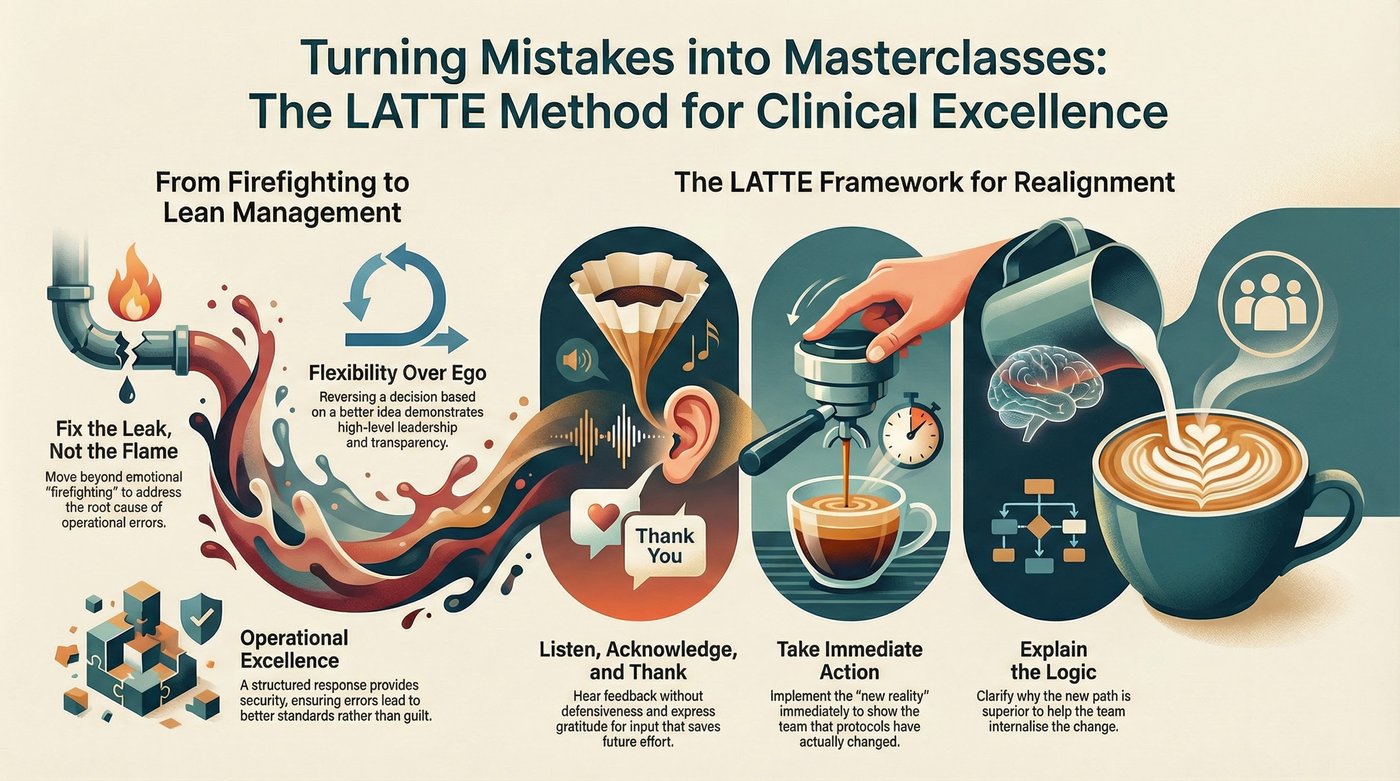
Step-by-Step Clinical Realignment
In an orthodontic practice, small errors—like a miscalculated billing code or a cumbersome digital scanning workflow—can quickly accumulate into significant “administrative ballast.” This hidden weight doesn’t just affect finances; it introduces friction into the daily patient flow, resulting in delayed appointments, increased staff stress, and eroded professional trust.
Using the LATTE method allows for a factual, forward-looking realignment that keeps the practice on autopilot by proactively correcting these systemic issues. The framework transforms internal friction into a documented process of continuous improvement. It shifts the entire team’s perspective from fearing error reporting to valuing it as a direct contribution to operational excellence.
Leaders who master this method ensure that every mistake is a tuition payment for a future masterclass, not a simple cost center. When a protocol fails, it is an opportunity to refine the “practice machine,” making it more resilient against the unpredictable nature of clinical dentistry.
Listen & Acknowledge: When a technician or assistant points out a flaw in a new protocol, hear them without getting defensive. True leadership requires creating a safe psychological space where critique is welcomed as a pathway to shared success.
Acknowledge that their observation has merit and has prompted deep thought, recognizing the intellectual value of their frontline experience. A simple, non-defensive acknowledgment immediately de-escalates the situation and validates the reporter, reinforcing that the practice is an outcome-driven environment.
Thanks: Express genuine gratitude. Frame their input not as a complaint but as a critical intervention that just saved the practice from weeks of future wasted effort, financial loss, or potential patient dissatisfaction.
Thanking them transforms the act of reporting an error into a recognized, valuable contribution. It signals to the rest of the team that vigilance is rewarded, which is essential for maintaining high clinical standards and a proactive culture of care.
Take Action: This is the most critical step and must be immediately visible. Your program must actually change, demonstrating that the feedback loop is real and functional. Show the team that the “new reality” is being implemented immediately.
In the clinical setting, this means assigning specific ownership and a strict deadline for the fix. For instance, if a sterilization procedure is flagged, the updated protocol and documentation must be ready before the next session. Delaying this step renders the previous listening and thanking null.
Explain: Clarify why the new path is superior. This explanation is not sugarcoating the failure of the old system; it’s providing the logic that helps the team internalize the change and understand the systemic improvement.
The explanation should always tie the technical fix back to the practice’s core mission, such as patient safety or predictable profitability. When the “why” is clear, compliance with the new standard becomes much higher because the team understands the benefit to the patient and their own workflow.
Eliminating the “Firefighting” Response
When a leader relies only on apologies, they are essentially “firefighting”—putting out the emotional flame without fixing the underlying gas leak. This reactive stance forces the practice into a state of perpetual recovery, depleting staff energy and undermining long-term efficiency.
The true cost of “firefighting” is the opportunity cost lost to managing preventable chaos. Lean management in dentistry is about fixing the leak at its source through a structured methodology. By using the LATTE framework to address mistakes, you provide a sense of security and professional maturity.
The team learns that errors won’t lead to a theatrical performance of guilt or finger-pointing but to a better, more efficient standard that is immediately integrated into the clinic’s operational DNA. This transition from emotional management to systems management is what separates a good clinic from a great one.
The Role of Flexibility in Operational Excellence
Many practitioners fear that reversing a decision makes them look weak or indecisive, especially when the initial protocol was their own initiative. This is a crucial leadership error rooted in ego. In reality, being “convinced by the better idea”—even a subordinate’s idea—is a sign of high-level dental team performance and confidence.
Operational excellence demands commitment to the optimal result, not personal ownership of the process. Adopting this transparency makes the practice more resilient and much more relaxed, as the focus is always on the best clinical outcome for the patient and the streamlined success of the clinic.
This flexibility attracts top talent who value a logic-driven, meritocratic environment. When staff see that the best ideas win regardless of title, they become more engaged and invested in the practice’s long-term growth and reputation.
Conclusion: Lead with a Plan
Whether you are dealing with a minor clinical hiccup, such as optimizing inventory rotation, or a major management pivot, like integrating AI diagnostic tools, the goal is the same: be the person who provides the enduring solution. A planned response through LATTE demonstrates leadership control and prevents internal issues from ever reaching the patient.
By mastering the LATTE concept, you turn every setback into a professional masterclass. You move your practice away from the paralyzing weight of past errors and into the fast lane of future success, driven by continuous, structured improvement. Lead with a plan, and your team will follow with confidence.