

The Subscription Revolution: Using Flexible Payment Systems to Enhance the Patient Journey
Published on: Jun 16, 2026
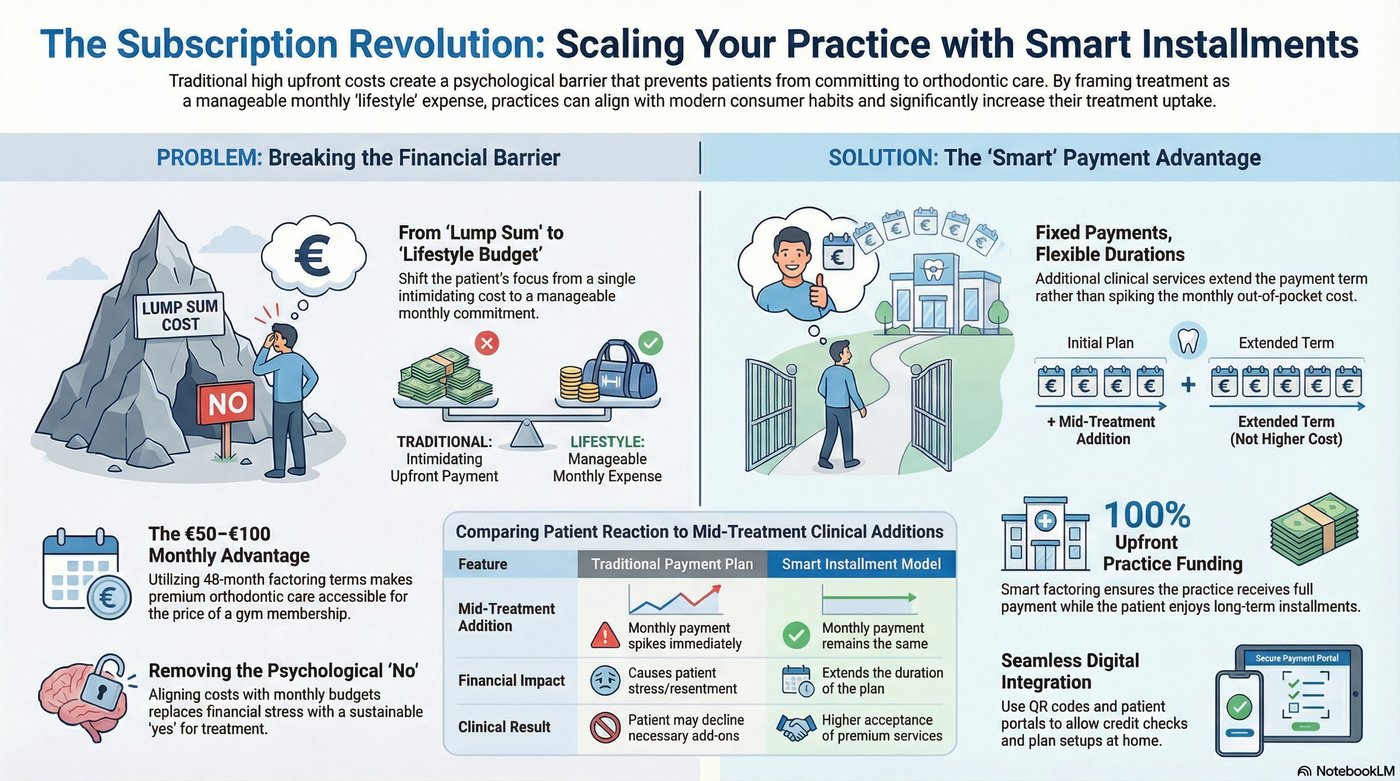
In the modern orthodontic landscape, the way we present the cost of treatment is just as important as the clinical results we achieve. We are no longer just competing with the dentist down the street; we are competing for a share of the patient’s monthly “lifestyle budget” alongside their gym memberships, streaming services, and car leases.
To thrive in this environment, orthodontic practice management must evolve. The traditional hurdle of large upfront costs or rigid, high-interest payment plans often prevents patients from saying “yes” to the high-quality, private services they truly want. By adopting a “subscription-style” mindset through smart installment plans, you can remove financial friction and significantly improve treatment acceptance.
Reducing Financial Friction with Smart Installments
The “Smart Installment” model is a game-changer for patient-centric dental leadership. Instead of viewing treatment as a single, intimidating lump sum, we frame it as a manageable monthly commitment. This is particularly effective when integrated with a 48-month factoring term.
When a patient understands that they can access premium orthodontic care for a fixed monthly amount—let’s say 50 or 100 euros—the psychological barrier to treatment effectively vanishes. The focus shifts from “How can I afford this?” to “This fits into my monthly budget.” This shift is essential for maintaining practice efficiency and ensuring a steady flow of new cases.
The Psychology of Fixed Monthly Payments
One of the most innovative features of modern factoring systems is the ability to maintain a fixed monthly payment even when additional services are added. In a traditional model, if a patient requires a mini-implant or an additional aesthetic procedure mid-treatment, their monthly payment would spike, often causing financial stress and resentment.
Under a smart installment plan, the monthly payment remains the same. Instead of increasing the amount, the system simply extends the duration of the payments. For example, a 200-euro additional charge doesn’t mean a 200-euro bill today; it might simply mean four extra months of the existing 50-euro payment at the end of the term. This “flat rate” feel provides the patient with financial peace of mind and makes it much easier for the clinician to recommend necessary clinical additions without fear of a negative reaction.
Strategic Pre-Qualification: Aligning Budgets with Clinical Goals
Effective leadership in the consultation room starts with understanding the patient’s perspective. Rather than presenting a treatment plan and hoping they can afford it, a lean approach suggests starting with their budget.
Ask the question: “What is your comfortable monthly budget for your new smile?”
Align the solution: Once you know they can afford 75 euros a month, you can use the smart factoring tool to show them exactly how that covers their comprehensive treatment over a 48-month period.
Secure the commitment: With the credit check valid for the entire duration, the patient feels secure, and the practice is guaranteed the full amount upfront.
Elevating Practice Performance through Seamless Integration
Modern patients expect digital convenience. Requiring them to fill out paper forms or wait for a credit check in the office is a relic of the past. High-performing practices now utilize patient portals and QR codes to allow patients to set up their own payment plans at home or on their mobile devices.
This level of practice efficiency not only impresses the patient but also optimizes dental team performance. Your treatment coordinator can focus on the clinical benefits and the “wow” factor of the transformation, while the automated financial system handles the technicalities. This creates a high-trust environment where the financial conversation is secondary to the clinical vision.
Driving Acceptance for High-End Private Services (AVL)
To offset the pressures of public health caps, orthodontic practices must grow their private service offerings (AVL). However, these services are often the first to be cut by patients during periods of high inflation.
By leveraging smart factoring, you make these premium options accessible. When the “upgrade” to a more aesthetic bracket system or a more comprehensive retention plan only adds a few months to a payment term—without changing the monthly out-of-pocket cost—patients are far more likely to choose the better option. This directly increases your practice revenue while ensuring the patient receives the best possible care.
Conclusion: Building a Modern, Patient-Centric Practice
The transition to a subscription-based payment model is a hallmark of visionary orthodontic practice management. It aligns the financial needs of the practice with the lifestyle needs of the patient, creating a win-win scenario that drives growth and reduces stress.
By implementing these smart financial systems, you aren’t just managing money; you are managing the patient experience. You are removing the “no” and replacing it with a sustainable, long-term “yes.” As you look to the future of your clinic, remember that the most successful practices are those that make it easy for patients to choose excellence.