

The Patient-as-Customer Paradox: Elevating Orthodontic Care Through Service Excellence
Published on: Jun 15, 2026
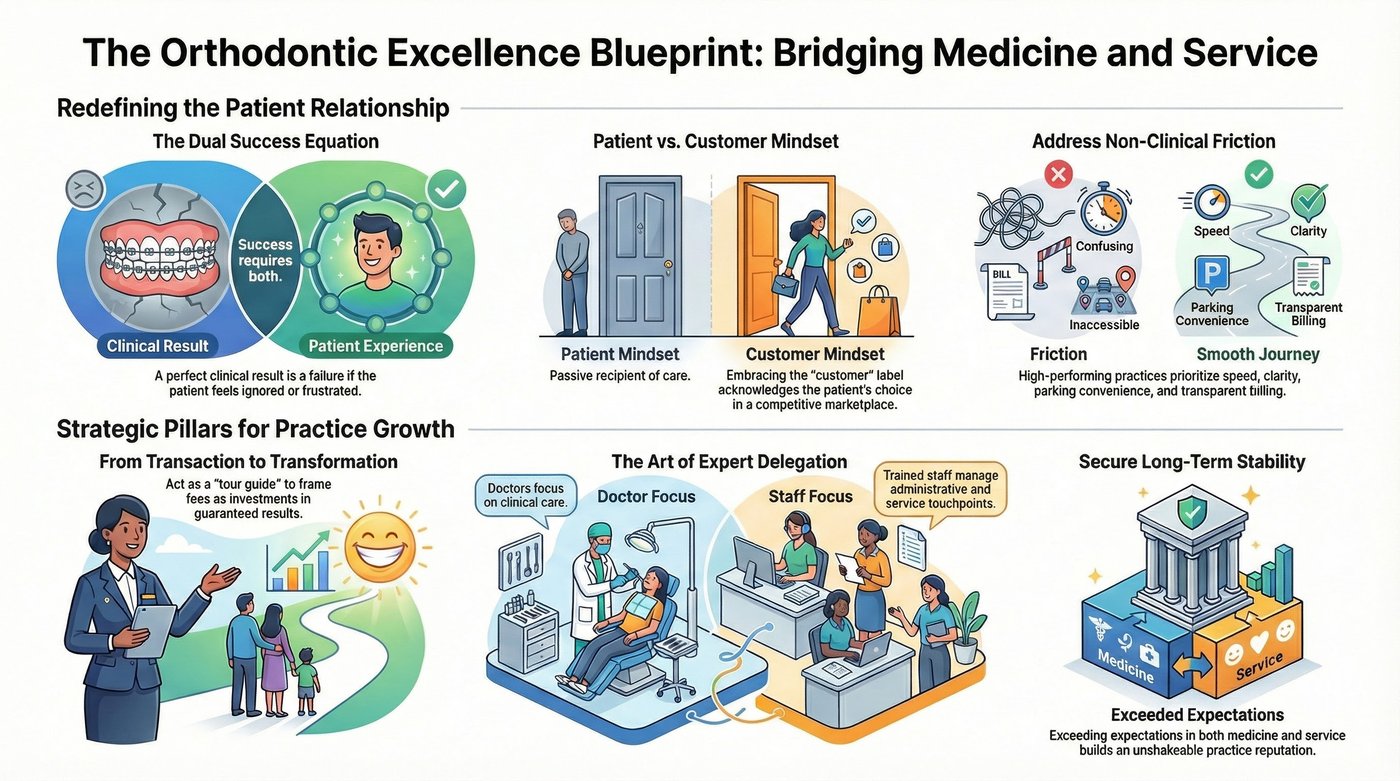
In many clinical circles, the word “customer” is treated with suspicion, as if it diminishes the sacred nature of the doctor-patient relationship. However, clinging to a purely medical perspective can be a significant strategic error. While our medical duty is to diagnose and treat pathology, the modern orthodontic patient is navigating a marketplace where they have choices, voices, and high expectations for their experience.
To lead a high-performing practice, we must bridge this gap. Embracing the “patient-as-customer” mindset isn’t about commercializing medicine; it is about providing the level of empathy, convenience, and respect that today’s savvy healthcare consumers deserve.
The Ethical Foundation of Service
Treating someone as a customer does not mean compromising clinical integrity. Rather, it means acknowledging that a perfect clinical result is only one part of the equation. If a patient leaves with straight teeth but feels disrespected, ignored, or frustrated by administrative friction, the journey is a failure.
In the realm of orthodontic practice management, we must realize that patients are looking for more than just a “cure.” They are looking for a service experience that includes speed, clarity, and genuine human connection. When we view the patient as a customer, we become hyper-aware of the factors that lead to dissatisfaction, such as long waiting times, lack of parking, or confusing billing processes. If we fail to address these “non-clinical” needs, we risk losing patients to competitors who may offer inferior medical care but superior service design.
Mastering the Value Conversation
One of the greatest challenges for practitioners is the discussion of fees. When we view the patient solely through a medical lens, the price often feels like an awkward hurdle at the end of a consultation. This is because the value has not been properly framed throughout the journey.
A customer-centric approach guides the patient from the first touchpoint. By acting as a “tour guide,” you explain the process, the long-term benefits, and the security of professional care. By the time the financial discussion occurs, the patient isn’t just buying “braces”—they are investing in a guaranteed result and a premium experience. When the value is clearly established, the price becomes secondary, and the conversation moves from a “transaction” to a “transformation.”
Leadership and the Art of Delegation
A common misconception in dental leadership is that being “customer-focused” means the doctor must be available at all times. This is a recipe for burnout and actually reduces the quality of service. True leadership involves a clear division of roles.
Clinical Expertise: The doctor remains the expert provider of medical care.
Administrative Excellence: Trained staff handle billing, scheduling, and logistics.
By delegating these touchpoints, you ensure the patient receives faster, more accurate information from specialists in those areas. This allows the doctor to focus on clinical excellence while the “customer” receives a streamlined, professional experience at every stage of their journey.
Conclusion: Earning the Choice Every Day
The term “customer” serves as a vital reminder: our patients have chosen us out of a sea of options. To honor that choice, we must exceed their expectations in both medicine and service. By adopting this mindset, you don’t just “fix teeth”—you build a reputation for excellence that secures the long-term growth and stability of your practice.