

The Operating System of Excellence: Why Core Values are the Key to Practice Efficiency
Published on: Jun 27, 2026
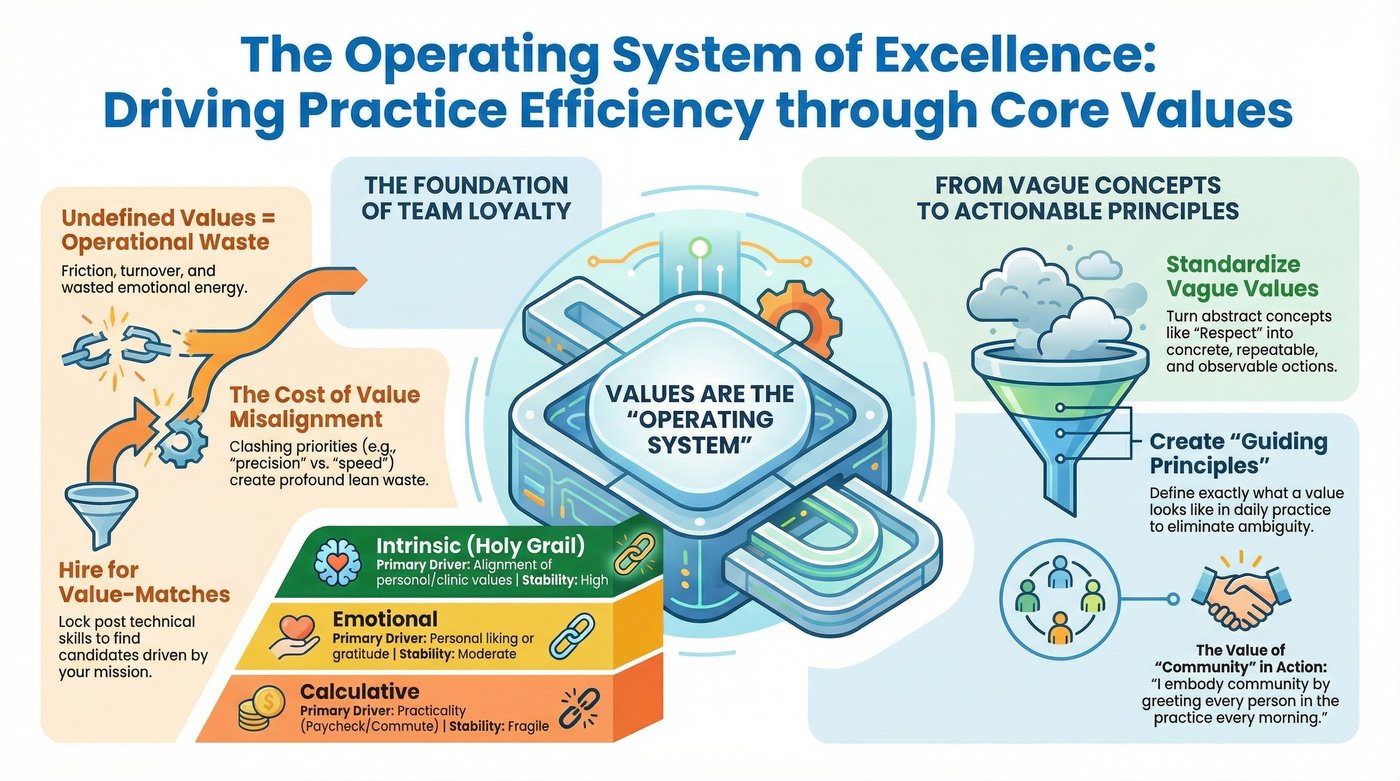
In the technical world of orthodontics, we often view “values” as soft, fluffy concepts—marketing slogans that look good on a website but have little impact on the daily clinical grind. This is a critical leadership mistake. From the perspective of Lean Orthodontics, core values are not just words; they are the operating system of your practice. When this system is undefined or ignored, you encounter friction, high staff turnover, and massive amounts of wasted emotional energy.
To build a self-correcting, high-performance machine, you must transition from treating values as a marketing gimmick to treating them as a structural foundation. When your team is aligned on a fundamental level, conflicts dissolve, and operational excellence becomes the natural byproduct.
The Cost of Value Misalignment
What happens when your definition of “precision” clashes with your assistant’s definition of “speed”? You may demand absolute clinical perfection, while they prioritize moving through the schedule as fast as possible. This misalignment creates a silent, simmering frustration that eventually leads to resignation.
In lean management, this is a profound form of waste. It is a waste of talent, time, and training investment. You cannot simply impose your values on a new hire by handing them a brochure. Values are deeply rooted drivers shaped by upbringing and culture. True leadership is about facilitating a process of alignment where the practice’s mission resonates with the employee’s internal compass.
The Three Levels of Team Loyalty
To master practice growth, you must understand the three tiers of commitment:
Calculative Loyalty: The employee stays because the commute is short or the paycheck is acceptable. This is the most fragile state.
Emotional Loyalty: They stay because they like you or feel a sense of gratitude for the training you provided.
Intrinsic Loyalty: The “Holy Grail.” This occurs when their personal values align perfectly with the clinic’s values. They don’t just work for you; they believe in what the practice stands for.
A lean practice stops “hiring bodies” and starts hiring for value matches. During the interview process, look past the technical skills and ask what truly drives the candidate. A highly skilled professional with mismatched values is a ticking time bomb for your team culture.
Turning Vague Values into Actionable Principles
The reason most value statements fail is that they are too vague. Respect or community means different things to different people. For one team member, respect is saying “please”; for another, it is the doctor saying “goodbye” before leaving the clinic.
Lean thinking requires standardization. You must turn vague values into “guiding principles”—concrete, repeatable actions. For example, the value of “community” becomes “I embody community by greeting every single person in the practice every morning.” By defining exactly what a value looks like in action, you eliminate ambiguity and create a unified culture that thrives on clarity rather than guesswork.
Conclusion
Core values are the structural foundation of a high-performance orthodontic practice, serving as the operating system that drives efficiency and reduces waste. By moving beyond vague marketing slogans and establishing concrete, actionable guiding principles, leaders can foster intrinsic loyalty and ensure team alignment. Ultimately, when a practice hires for value matches and defines excellence through shared principles, it eliminates operational friction and builds a self-correcting machine capable of sustainable growth.