

The Internal Customer Journey: Mastering the Employee Life Cycle
Published on: Jun 9, 2026
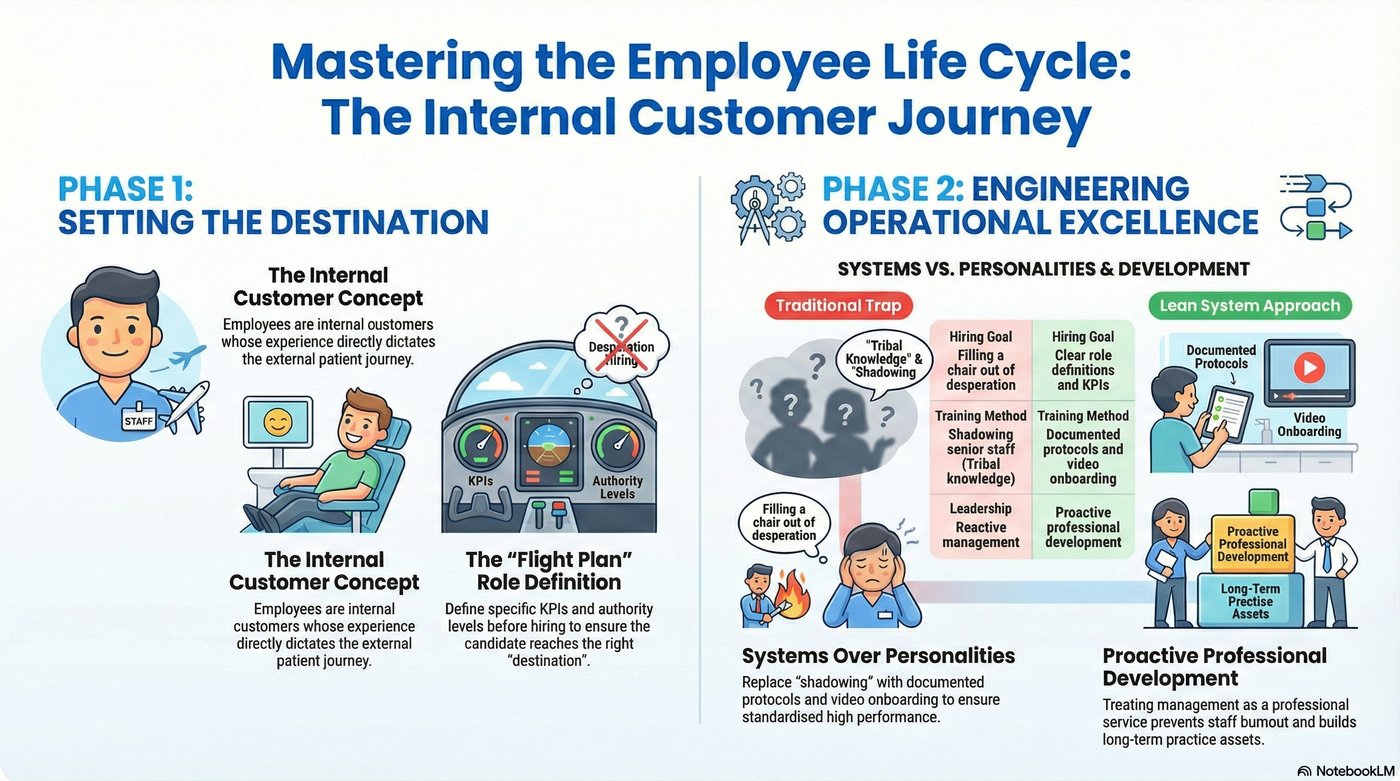
In the high-performance world of orthodontics, we spend a vast amount of energy perfecting the patient journey. We map every touchpoint to ensure the external customer feels valued. However, a lean practice owner understands a fundamental truth: your employees are your most important internal customers. If their journey is chaotic, uninspired, or poorly managed, they cannot possibly deliver a five-star experience to your patients.
The link between staff satisfaction and patient outcomes is direct and measurable. When an assistant feels overwhelmed by unclear expectations, that stress manifests as shorter conversations with parents or missed clinical details. A team that feels like “customers” of the practice leadership will naturally mirror that care toward the people in the chairs.
As Dr. Martin Baxmann emphasizes, the employee journey is a complete life cycle that requires as much intentionality and structure as a complex clinical treatment plan. From the first role definition to the final exit interview, every stage must be engineered to protect your practice culture and maintain operational excellence.
This lifecycle approach prevents the “reactive hiring” cycle that plagues many dental clinics. Instead of viewing turnover as a failure, lean leaders view every stage—recruitment, onboarding, development, and even departure—as a system that can be optimized for long-term practice stability.
Setting the Destination: Clear Role Definitions
The most frequent error in practice management begins before a single CV is even read. Many orthodontists hire out of desperation, seeking a “body to fill a chair” without defining what that role actually looks like. This vagueness leads to “scope creep,” where an employee eventually feels exploited because their duties have expanded without agreement.
A clear role definition isn’t just a list of tasks like “answer phones” or “sterilize instruments.” It is a description of the value the person brings. For example, a Treatment Coordinator’s role isn’t just “selling braces,” but “guiding the patient toward a life-changing health decision.” This shift in definition changes how they perceive their daily work and success.
Think of this as boarding a flight. If you intend to go to Athens but board a plane to Reykjavik, the result will not match your expectations. If you hire a practice manager but fail to provide them with the specific authority, KPIs, and requirements for success, you have programmed them for failure.
In a lean system, every role must have a clear “destination” and a documented flight plan. For instance, if a front-desk person knows their KPI is “90% same-day scheduling for new inquiries,” they have an objective target. This clarity is the foundation of employee satisfaction and dental team performance, removing the anxiety of “doing a good job” based on the doctor’s mood.
The Onboarding Trap: Systems Over Personalities
A significant source of waste in many clinics is the “shadowing” method of training. We often hand a new hire over to the most senior assistant, assuming that tenure equals teaching ability. This ignores potential interpersonal conflicts, pedagogical gaps, or even the senior staff member’s fear of being replaced by a more tech-savvy newcomer.
Shadowing often passes down “workarounds” and bad habits rather than the doctor’s intended protocols. It creates a “telephone game” where the original lean standard is diluted through every generation of staff. This leads to clinical variability and increased chair time for simple procedures.
Operational excellence requires that training be independent of individual personalities. Instead of relying on tribal knowledge, use a digital academy model. This ensures that every team member, whether hired today or five years ago, operates from the same playbook.
By moving training into a structured, system-based environment, you protect the new hire from feeling like an intruder. They can learn the “why” behind the “how” in a low-pressure setting before ever stepping into the clinical flow. This creates immediate confidence and reduces the burden on your existing team.
Documented Protocols: A “source of truth” that defines how tasks are performed, accessible to all.
Video Onboarding: Standardized visual training that ensures every new hire learns the same high standard without peer bias.
Objective Milestones: Clear markers, such as a “90-day checklist,” that prove a new employee is ready to work independently.
The Strategic Importance of Professional Development
Once an employee is onboarded, their journey enters the growth phase. To keep your “internal customers” loyal, you must treat management as a professional service. This involves understanding the psychological drivers of your team and providing the “fuel” for their career development.
High-achieving staff members often leave because they feel stagnant. In an orthodontic practice, growth doesn’t always mean a higher title; it can mean mastering new digital workflows, taking the lead on a community project, or improving clinical photography skills. Recognition of these micro-advancements is vital for retention.
When you invest in their skills, you aren’t just improving the individual; you are building an asset for the practice. A lean leader anticipates the needs of the team—whether it’s a salary review or a new clinical challenge—before they become points of friction.
This proactive leadership prevents the “bloody knees” of burnout. By scheduling regular 1-on-1 “check-ins” instead of annual “reviews,” you keep a pulse on the team’s health. This ensures the practice stays in a state of flow, where the doctor can focus on clinical excellence while the team manages the operational details.
Conclusion: Leading with Intentionality
Managing the employee life cycle is not an administrative burden; it is a strategic necessity. By treating your team as valued customers and providing them with the structure they need to succeed, you create a resilient practice culture that can withstand external economic or competitive pressures.
When the internal journey is smooth, the external patient experience becomes naturally superior. A happy, confident team doesn’t need to be told to smile; they radiate positivity because they are supported by a system that honors their contribution. Mastering this cycle is the hallmark of the modern, lean orthodontist.