

The Competitive Edge: Why Your Patient Journey is Your Best Defense
Published on: Jun 9, 2026
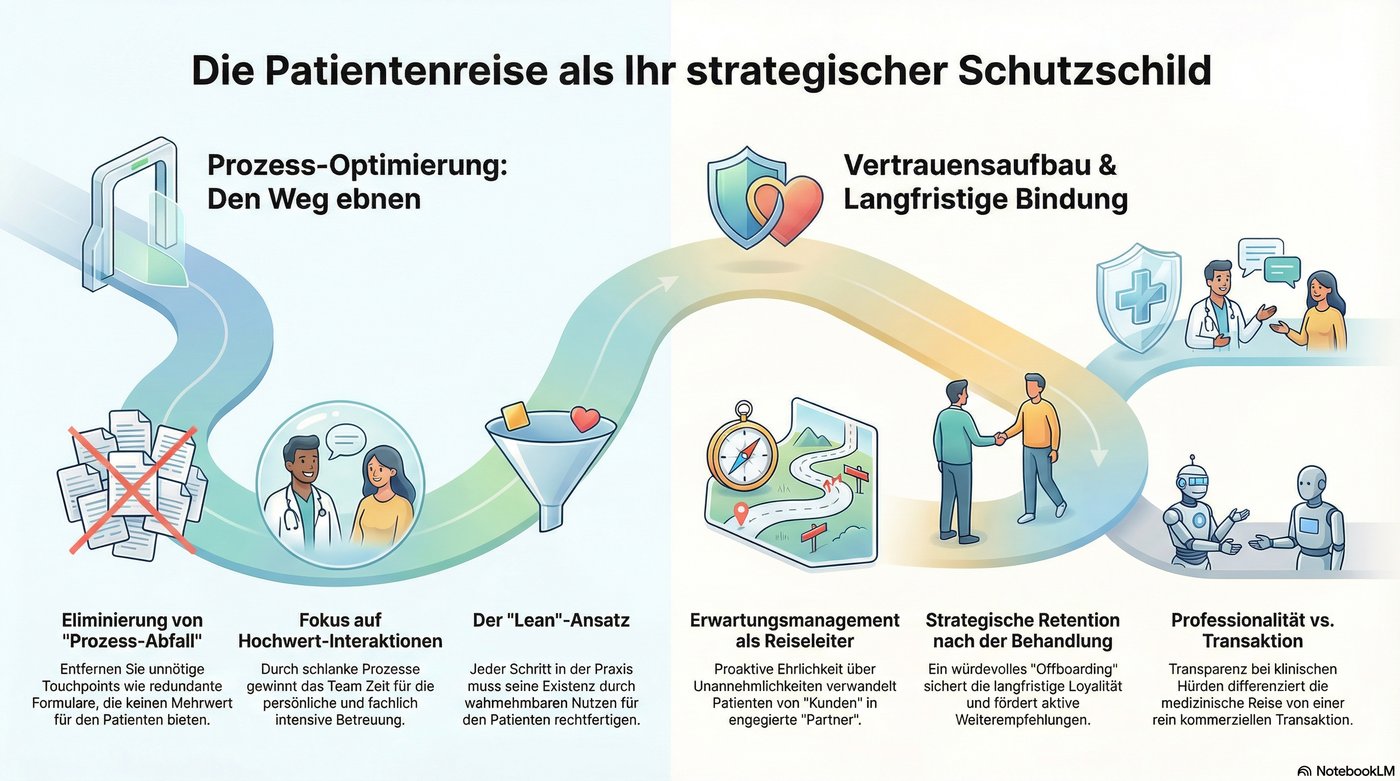
The orthodontic and dental specialty landscape is undergoing a fundamental transformation. In recent years, we have witnessed the aggressive rise of “direct-to-consumer” competitors who attempt to replicate our complex clinical results by systematically cutting the doctor out of the process. They perceive the traditional practitioner’s office as a point of friction—a bottleneck that unnecessarily adds both time and financial cost to the patient journey. While our clinical training mandates that we know this approach is medically unsound and ethically flawed, we must acknowledge why these models are gaining market share: they successfully offer a perceived, frictionless, and seamless customer experience.
To effectively protect the future integrity and profitability of our practices, professional dental leadership must immediately focus on out-performing these low-friction competitors, not just in superior clinical outcomes, but in the operational excellence of the patient journey itself. In any truly lean, high-performing practice, the journey is not just a sequence of steps; it is a critical strategic asset that actively builds profound trust, fosters lifelong patient loyalty, and generates long-term advocacy. Prioritizing flow and experience is the core defense mechanism against disruption.
Identifying and Eliminating “Process Waste”
In the foundational principles of Lean management, anything that does not directly help the patient—the “traveler”—reach their final outcome—the “island” of a perfect smile—is defined as systemic waste. Many highly professional practices unknowingly maintain touchpoints purely out of organizational tradition, not necessity. These points of friction include extensive, long intake forms that redundantly ask for the same biographical or medical information twice, or unnecessary in-person check-ups that could be efficiently handled via modern remote monitoring technologies. This “waste” consumes valuable staff time and erodes patient goodwill.
To genuinely achieve operational excellence, practice leadership must rigorously audit their entire “process landscape”. This means utilizing value stream mapping to scrutinize every single step in the patient journey. Each interaction—from the initial website visit to the final debond appointment—must meticulously justify its existence by adding palpable, perceived value to the patient. By identifying and aggressively removing these unnecessary “hiccups,” such as excessive patient wait times or poor internal handoffs, we free our highly skilled staff to focus their expertise on high-value, empathetic human interactions. This immediately improves both dental team performance and dramatically elevates the patient’s sense of personalized care. A truly lean journey is ultimately a shorter, more direct, and significantly more enjoyable path to clinical success. This systematic reduction of friction is a hallmark of sophisticated practice management.
Expectation Management: The Tour Guide’s Secret
The most effective and trusted tour guide understands a fundamental principle: a traveler will readily accept a delay or inconvenience if they are informed about it transparently and well in advance. This psychological principle applies directly and powerfully to the delivery of specialized dental care. Clinical “pain points”—such as the temporary initial discomfort following appliance placement or a necessary longer treatment phase due to unique biological factors—become sources of complaint only when the patient feels completely “lost,” misled, or outright deceived.
Honesty and preemptive communication must form the bedrock of your core touchpoint strategy. This involves proactively managing patient expectations by adopting language such as, “This part of the trip might be a bit bumpy, as we expect some initial soreness for the first 48 hours, but please know we are right on track to achieve your goal”. This forward-looking transparency maintains and reinforces trust, even during clinically difficult or uncomfortable moments, such as managing unexpected tracking issues or appliance breakage.
This high level of proactive communication differentiates a professional medical journey from a simple commercial transaction. Critically, it transforms the person under your care from a passive “customer” into an actively committed “partner” in their own treatment success. Practice leaders should consider implementing a dedicated Patient Coordinator role whose sole function is to oversee this critical educational and emotional support structure.
The Strategic Importance of Post-Journey Retention
The patient journey is not definitively concluded the moment the active appliances come off and the desired smile is revealed. In fact, the crucial “retention” phase is where the long-term, exponential value of the entire practice is truly solidified and realized. A patient who experiences an exemplary treatment phase but subsequently feels forgotten or abandoned after their active treatment ends represents a significant and costly missed opportunity for practice advocacy. This neglect severely limits the potential for future referrals.
A strategically well-designed journey therefore must necessarily include a meticulously planned “dignified offboarding” process. This includes detailed, customized retainer instructions, automated scheduling of the first post-treatment check-ups, and a seamless handoff back to their general dentist with a clear summary of care.
Furthermore, a long-term retention plan should continue to proactively add value, perhaps through automated check-in emails or offering a reduced fee for retainer replacement years down the line. This sustained engagement ensures that the patient remains a powerful and vocal ambassador for your practice years after their initial “arrival” at the island. In the sophisticated entrepreneurial sense, a truly successful patient journey is ultimately defined as one that creates a perpetual, lifelong loop of enthusiastic referrals, repeat care, and enduring patient loyalty. The realized lifetime value of that loyal, retained patient far outweighs the minimal cost of the retention protocol.
Conclusion: Engineering a Seamless Experience
Mastering and controlling the patient journey in a specialty like orthodontics or high-end dentistry requires a deliberate and profound shift in mindset: it is about moving deliberately from reactive, “accidental” service delivery to proactive, intentional, high-fidelity design. When practice leaders take the necessary time to map, document, and meticulously optimize every single patient interaction and operational flow, they are not merely improving service—they are engineering a resilient, high-margin business model that no direct-to-consumer competitor can sustainably replicate.
It is time to stop conceptualizing your specialized dental practice as simply a disjointed series of mandatory medical appointments. Instead, you must start thinking of the entire engagement as a comprehensive, premium travel experience for the smile, curated for the modern, demanding consumer. When the patient’s end-to-end journey is universally top-notch, the increased revenue, stellar reputation, and market dominance will follow as a natural consequence. Take a critical look at your clinical map today: where specifically can you remove a costly operational bottleneck, and where can you strategically add more differentiated value for the traveler?
Engineering a superior patient journey is your practice’s most sustainable competitive advantage. It is the only defense that blends clinical expertise, operational efficiency, and genuine human connection into an offering that no cost-cutting, digitally-focused competitor can ever truly match.