

Solution-Oriented Leadership: From Theatrical Drama to the “Broom and Dustpan”
Published on: Jun 28, 2026
The Problem with Problem-Wallowing
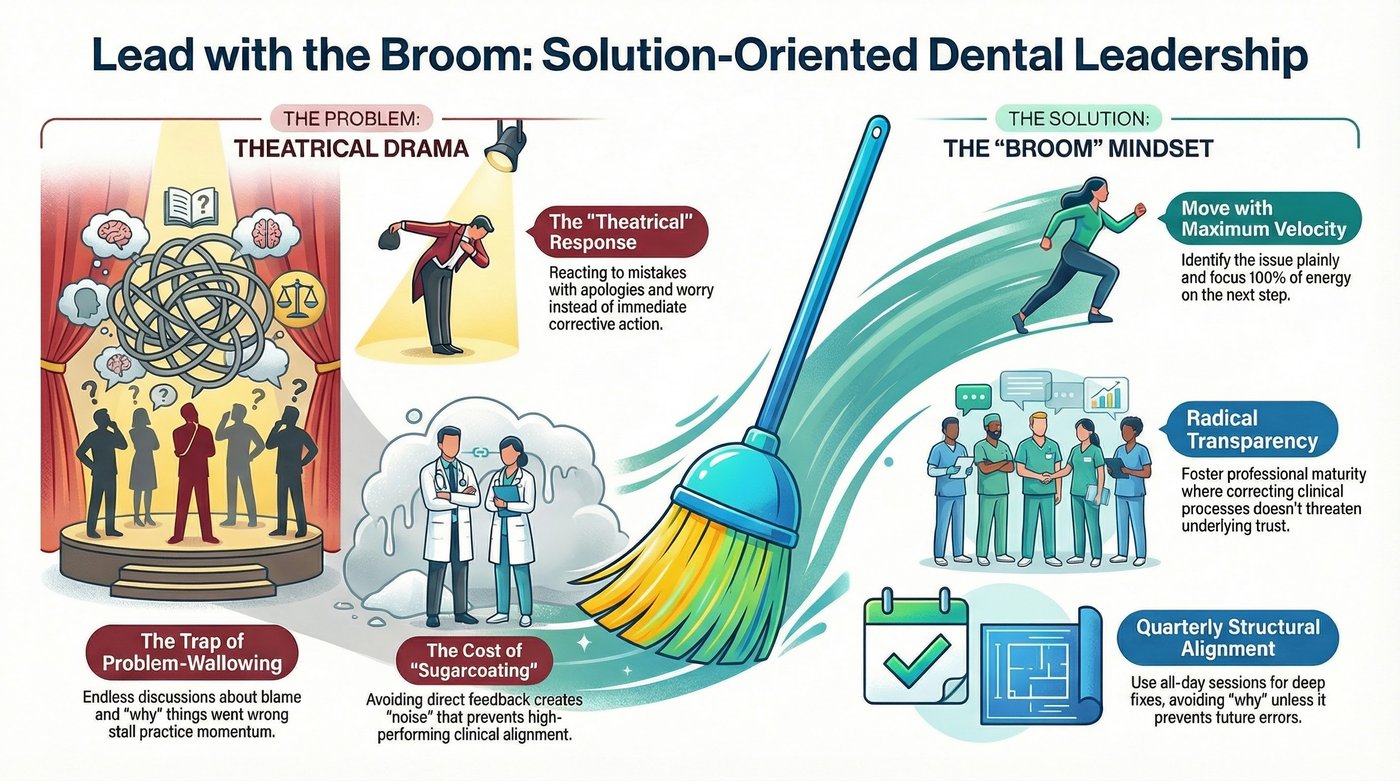
In the high-pressure environment of a modern dental or orthodontic practice, time is the most precious resource. Yet, I often observe a recurring pattern where team meetings and clinical huddles devolve into “problem-wallowing.” These are sessions where the focus remains stubbornly fixed on what went wrong, who missed the step, and the emotional fallout of the error. This approach is the antithesis of lean management in dentistry. To be a truly successful leader and entrepreneur, you must foster a culture that moves from the identification of a problem to the implementation of a solution with maximum velocity.
Consider the “broken plate” analogy. When a plate shatters in a kitchen, there are generally two types of reactions. The first is a theatrical performance: someone gasps, begins a lengthy apology, starts analyzing exactly how the plate slipped, and worries about the cost. The second is the practical response: someone immediately reaches for the broom and the dustpan. They recognize that shards on the floor are a safety hazard and that the priority is clearing the mess so the kitchen can continue to function. In your practice, you must be the person with the broom. Your role as a leader is to identify the issue plainly, skip the administrative drama, and focus 100% of your team’s cognitive energy on the next constructive step.
Creating a Culture of Clinical Trust
When managing a large practice with forty or more employees, the volume of daily interactions makes “sugarcoating” or elaborate “packaging” of feedback impossible. Informal meetings and chairside corrections are the heartbeat of the clinical day. We must reach a level of professional maturity where a direct disagreement about a clinical process—whether it concerns a specific bracket position, a wire choice, or a billing code—is never interpreted as a personal attack. If a correction to a clinical workflow questions the underlying trust of the professional relationship, the practice cannot scale.
Correcting a mistake should be viewed as a necessary realignment, much like adjusting a treatment plan for a patient. When you remove the “fuss” and the emotional baggage associated with feedback, your clinical processes become significantly smoother. The atmosphere of the clinic transforms from one of anxiety to one of relaxed precision. This radical transparency is the essential ingredient that allows a complex dental practice to run on a high-performing autopilot. It empowers staff to take ownership of their roles without fear of retribution for honest mistakes, provided they are focused on the “broom.”
Quarterly Alignment: The All-Day Solution
While our daily communication is designed to be fast, plain, and solution-focused, we recognize that some systemic issues require more than a quick huddle. We utilize quarterly all-day meetings to address deeper structural challenges and long-term strategic goals. However, even in these extended sessions, the mandate remains the same: moving toward the solution. We do not spend hours debating the “why” of past failures unless that analysis leads directly to a “how” for preventing it in the future. The post-mortem on an error is only valuable if it produces a blueprint for future success.
By consistently modeling clear, plain language and maintaining a bias toward action, you project a brand of dental leadership that both patients and staff inherently respect. Patients can sense the efficiency of a well-aligned team, and staff feel secure in an environment where expectations are clear. You strip away the noise of office politics and interpersonal drama, leaving only the music of a well-run, profitable practice. This level of clarity is a competitive advantage that distinguishes an elite practice from an average one.
Conclusion: Lead with Clarity
Speaking plainly is not just a personality trait; it is a fundamental professional skill for the modern orthodontist and dentist. It significantly reduces the “mental load” for both the clinician and the supporting staff. When you are clear, specific, and relentlessly solution-oriented, you create an environment where excellence becomes the default and every team member knows exactly where they stand. Start today: the next time a clinical error occurs or you need to provide difficult feedback, skip the “compliment sandwich” and get straight to the “broom.” Your team and your bottom line will thank you.