

Software Standardization and System Metrics: The Lean Approach to Billing Efficiency
Published on: Jun 21, 2026
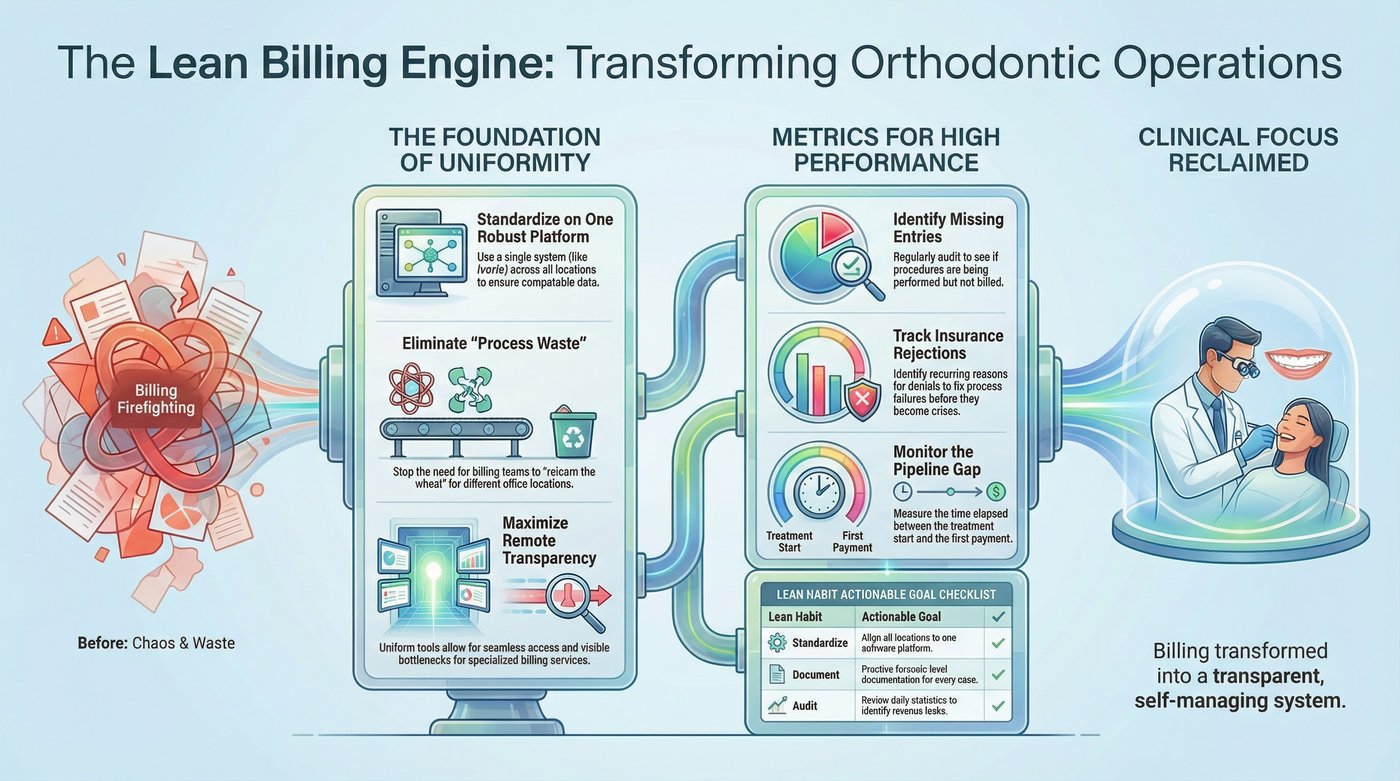
Operational excellence in a multi-location or growing orthodontic practice requires a radical, top-down commitment to process standardization. Without clear, repeatable processes, the administrative load scales disproportionately with growth, leading to critical bottlenecks and staff burnout. When a practice is unorganized, billing inevitably devolves into a source of constant “firefighting”—reactive adjustments to errors rather than proactive management. Implementing a structured approach to software and data governance transforms billing into a transparent, predictable, and self-managing system.
Clinic leaders must recognize that financial integrity is built on data integrity. To protect the practice from internal chaos and external audits, treat billing data with the same rigorous clinical seriousness reserved for digital scans or patient records. This means defining data entry protocols and enforcing them across all locations, ensuring every entry is accurate and verifiable. By consistently measuring the right performance metrics and utilizing robust, integrated software platforms, your leadership shifts from “hoping the numbers are right” to definitively “knowing the system is optimized” and financially sound.
The Power of Software Uniformity
In the context of Lean management, operational inefficiency is often called “process waste”. A primary culprit in multi-location dental groups is the pervasive use of disparate practice management and billing software across different sites. This fragmentation forces your billing specialists—whether in-house or outsourced—to continuously relearn unique interfaces, coding nuances, and data input sequences for every single patient. This constant context-switching drastically slows down throughput, introduces human error, and dramatically increases administrative overhead.
True Lean operational efficiency mandates standardizing every office on a single, robust management platform. For example, platforms like ivoris by Computer Konkret are designed to handle complex multi-location data structures. This uniformity minimizes input errors and maximizes data transparency across the entire organization. Standardization also creates a pathway for seamless remote access, allowing practices to leverage specialized, high-performing external billing services without data transfer friction. When the practice tools are identical, the resultant data becomes genuinely comparable, making financial trends and hidden bottlenecks instantly visible to leadership. This consistency enables leaders to diagnose system failures rather than simply treating individual mistakes.
You Cannot Manage What You Do Not Measure
A common pitfall in growing practices is the reliance on lagging indicators, such as the total monthly production or collections number. This “big number” approach provides only historical data and is fundamentally insufficient for proactive management. High-performance practices require the consistent use of daily operational reports and key statistics to swiftly identify negative trends and stem leaks within the revenue cycle. Effective management is about intervention, not just retrospection.
Proactive leaders focus on leading indicators that signal system health. For instance, you must routinely audit for missing entries, ensuring that certain high-volume procedures, particularly those added mid-treatment, are not performed but then accidentally unbilled. Systematically tracking insurance rejections is crucial, not just on a claim-by-claim basis, but to identify recurring, structural reasons why a specific insurer is routinely denying claims. This points directly to necessary training or documentation changes. Furthermore, closely monitor the entire revenue pipeline, specifically the time gap between official treatment start and the actual receipt of the first patient or insurance payment.
The daily discipline of reviewing these statistics allows management to identify and correct process failures quickly, often within 24 hours, long before they escalate into a major financial crisis. For example, a spike in rejections from one insurance carrier might indicate a recent coding change missed by the front office. This “Lean” habit of relentless measurement systematically turns the previously “hidden” and complex world of billing into a visible, quantifiable, and manageable engine for sustainable practice growth. This level of granularity gives leaders predictive control over cash flow.
Strategic Discipline: Protecting the Clinical Focus
The strategic justification for implementing a highly structured, systemized billing process is ultimately not financial, but clinical. The primary goal is to protect and isolate the clinician’s invaluable “Zone of Genius”—the time dedicated to complex diagnosis, treatment planning, and patient care. If clinic leaders or doctors are forced to spend their critical evening hours fighting insurance companies, managing staff errors, or worrying about “Economic Efficiency Audits,” their cognitive load is diverted from performing at the highest clinical and leadership level.
Billing complexities vary globally, from navigating the heavy regulatory bureaucracy of systems like the German GoZ (Gebührenordnung für Zahnärzte) to managing the flatter, negotiated fee-for-service rates typical in other major markets. Regardless of the specific compliance landscape, the core leadership principles of organizational discipline remain universally true for maximizing performance and minimizing stress.
The principles form the foundation of administrative success:
Standardize your software. Use the unified platform to enforce procedural consistency across every satellite location.
Document forensically. Treat patient records and procedure notes as legal and financial evidence, ensuring every claim is supported by irrefutable clinical documentation.
Audit your own statistics. Use your metrics to self-correct before external audits or financial reports flag systemic issues, turning risk into competitive advantage.
By removing the “mental load” of billing chaos, you reclaim the energy required for clinical excellence and team leadership. Turn your billing into a predictable system, and focus on what truly matters: creating beautiful smiles and leading your team to success.
Conclusion
Implementing lean billing practices is not just about increasing collections; it is a fundamental act of operational leadership. When leaders commit to software uniformity and daily metric auditing, they effectively remove the administrative “mental load” that drains clinical energy. This reclaimed capacity is the essential ingredient for driving clinical excellence and fostering high-trust team leadership. A predictable billing system is the silent partner to your clinical success. Focus on systematizing your finances, and you ensure your attention remains fixed on the core mission: creating beautiful, life-changing smiles and guiding your practice to sustainable growth.