

Rational Decision-Making: Protecting the Practice Through “Tough” Empathy
Published on: Jun 30, 2026
The Hidden Cost of Avoiding Conflict
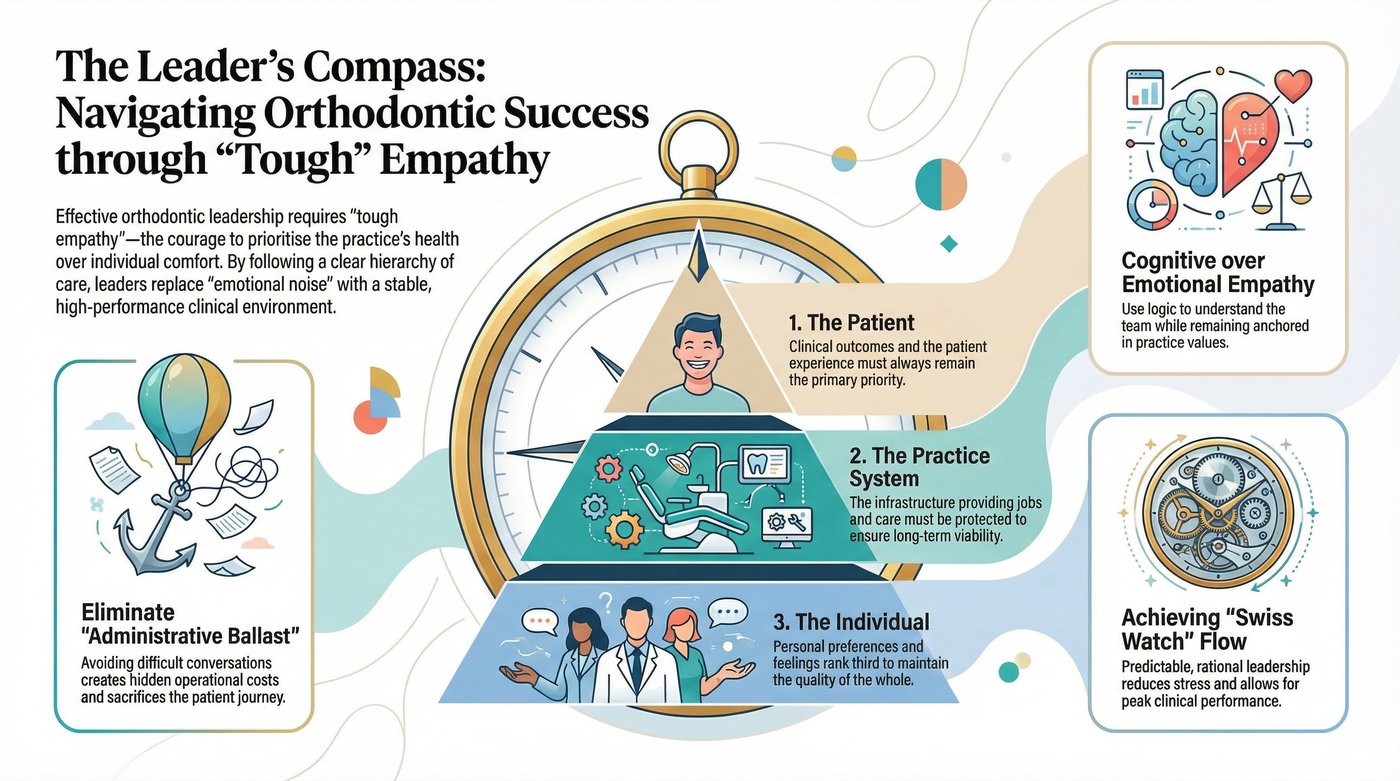
Every time you choose to be “considerate” as an excuse to avoid a difficult conversation, you are creating administrative ballast. This unseen weight slows operations, drains morale, and obscures genuine performance issues.
In orthodontic practice management, we must ask: Who exactly am I being considerate of, and why? Often, we realize we are protecting our own momentary comfort rather than investing in the employee’s long-term growth.
True operational excellence requires the courage to make decisions based on objective data and logic, even when those decisions are initially unpopular. Standards must remain the anchor of the practice’s sustained health.
Consider the common scenario of a veteran team member who insists on using a paper-charting method that is causing repeated digital errors. Allowing them to continue this way is a failure of leadership.
You are sacrificing the quality of the patient journey and the throughput of the entire team for the sake of one person’s emotional ease. This reluctance eventually signals that standards are optional.
A real-world example might be allowing a consistently late employee to keep their preferred morning shift. While seemingly kind, this avoidance sends a loud message to the punctual majority that commitment is undervalued.
Tough empathy means addressing the tardiness immediately and setting clear, rational boundaries. This firm approach supports the entire team’s expectation of fairness and maintains momentum toward peak performance.
The Hierarchy of Care
A lean leader understands a fundamental hierarchy of responsibility that must guide every management decision. This framework clarifies priorities, ensuring short-term emotional reactions do not derail the practice’s mission.
The Patient: Their clinical outcome, safety, and overall experience must always come first. Every protocol exists to protect them.
The Practice System: This includes the infrastructure, defined workflows, and financial viability that provide jobs and sustainable, high-quality care.
The Individual: Their personal feelings and preferences are secondary to the first two tiers. Their well-being is best served when the practice is secure.
When you prioritize the system and the patient, you are actually exercising the highest form of empathy. Enforcing a strict system for post-op communication directly protects patients from missed information.
By ensuring that the practice remains viable and profitable, you are securing the ability to support the families of every staff member for years to come. This is true proactive leadership.
Cultivating a Culture of Security
High-performing teams often feel far more secure under a rational, decisive leader than a “nice” but inconsistent one. Consistency removes the stress of navigating a leader’s unpredictable mood shifts.
A leader who utilizes cognitive empathy seeks to understand the team’s perspective and fears about change. However, this understanding never overrides the need to remain anchored in the practice’s values.
This disciplined adherence creates stability, allowing the team to know exactly what to expect from their environment. This unwavering stability is what facilitates the metaphorical “Swiss watch” clinical flow.
When everyone knows that all major decisions are made impartially for the good of the whole, the “emotional noise” decreases significantly. Team members move toward clinical excellence and hitting key performance indicators.
Conclusion: Bringing Enthusiasm into Action
Effective leadership transcends personality. Whether you are naturally extroverted or a quiet thinker, you can immediately use these tough empathy insights to improve your practice today.
Identify the areas where you have tolerated administrative ballast out of personal discomfort and commit to rational action. Don’t let past management fears hold you back from making systemic decisions.
Use cognitive empathy to deeply understand the root causes of friction, and then take the decisive action required to move your practice into a more profitable and professional future.