

Professional Growth Through Business-Minded Negotiation
Published on: Jul 4, 2026
Thinking Like an Entrepreneur
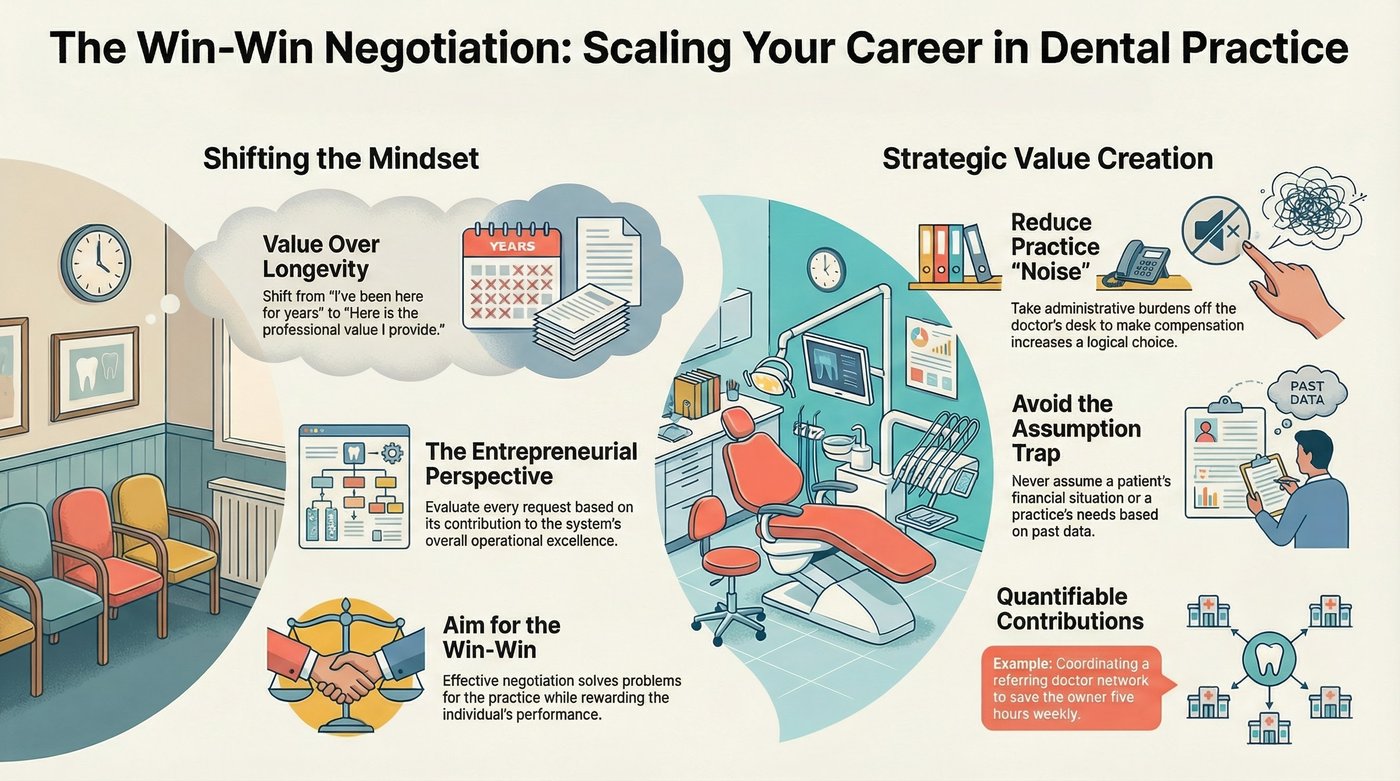
For many dental professionals, the idea of negotiating a contract or asking for a raise feels uncomfortable. This discomfort often stems from focusing on personal history—such as “I’ve been here for ten years”—rather than professional value. To achieve true operational excellence, every member of the team should learn to adopt a business-minded perspective during negotiations.
Shifting this mindset requires viewing oneself not as a dependent employee, but as a strategic partner in the practice’s success. Your value is measured by tangible metrics, not longevity. This includes consistently high patient satisfaction scores, optimized scheduling that minimizes downtime, and a verifiable contribution to the practice’s production goals.
In a lean practice, everything is evaluated based on its contribution to the system’s success. A true business perspective means understanding the practice P&L. For a hygienist, this might mean presenting data on their high utilization rate and low supply waste. For a practice manager, it means demonstrating consistent expense control.
If you want to negotiate effectively with a practice owner, you must demonstrate how your request creates a win-win situation for the entire clinic. Any ask, whether for a higher salary or a new piece of equipment, must be framed as an investment with a clear, measurable return for the business. This reframing transforms a personal request into a strategic business proposal.
Creating Value to Earn Value
The most convincing argument for a salary increase or a change in role is a demonstration of how you are reducing the “noise” or stress for the boss. Instead of focusing on your own needs, focus on the burdens you can take off the doctor’s desk.
This “noise reduction” is critical because it allows the doctor or practice owner to dedicate their time to high-production activities, such as complex procedures or specialized consultations. If a financial coordinator optimizes the insurance verification process, reducing claim denials from 10% to 2%, they are directly creating thousands of dollars in retained revenue for the practice.
Value creation isn’t just about administration. An orthodontic assistant who consistently masters bracket placement for quicker chair-time turnover is driving practice efficiency on a clinical level. Their efficiency enables the clinic to see one extra patient a day without extending operational hours, translating directly into increased profitability.
If you can say, “I am taking over the coordination of the referring doctor network, which will save you five hours of administrative work per week,” the decision to increase your compensation becomes logical and easy. You are not just asking for more; you are offering a service that increases the practice’s overall practice efficiency. This is the essence of high-level dental team performance. Framing your request around these quantifiable results moves the discussion from a subjective evaluation of your past performance to an objective discussion of future strategic growth.
Avoiding the Trap of Assumptions
One of the biggest mistakes in practice negotiation is making assumptions based on past data. This trap extends beyond patient care and into team negotiations. For instance, a practice owner might assume a high-performing associate is content because they haven’t explicitly asked for more, missing cues that they are seeking greater autonomy or partnership.
In clinical life, we often see this when a family declines a service for one child, and the staff assumes they will decline for the second. This is a missed opportunity for both the patient and the practice. Circumstances change. A family that was under financial pressure three years ago may now have the stability and desire for top-tier care.
This is why adopting a lean leader mentality is vital. A lean leader ensures that the standardized consultation process is followed every single time, without bias. This consistency guarantees that high-value opportunities are not missed due to personal bias or prior assumptions about a patient’s willingness to accept care. We must communicate openly and treat every interaction as a fresh chance to find a win-win outcome. By separating historical data from current potential, we maximize professional and practice success.
Conclusion: The Goal of Every Interaction
Negotiation in orthodontics should always aim for a result where both parties feel they have gained something valuable. This shared gain is the foundation of a successful, enduring professional relationship, whether between a doctor and an associate or a team member and the practice leader.
By moving away from rigid demands and toward a “problem-solving” mindset, you foster a culture of trust and high performance. A problem-solving approach replaces adversarial bargaining with a collaborative strategy, focusing on measurable business outcomes rather than emotional pleas.
Ultimately, this business-minded approach ensures that professional growth is directly tied to the growth of the practice. Whether you are the owner or a team member, looking for the win-win is the most effective way to ensure your practice—and your career—continues to thrive. This alignment of personal and practice goals is the defining trait of successful dental leadership.