

From Signature to Success: Mastering the Lean Onboarding and Retention System
Published on: Jun 27, 2026
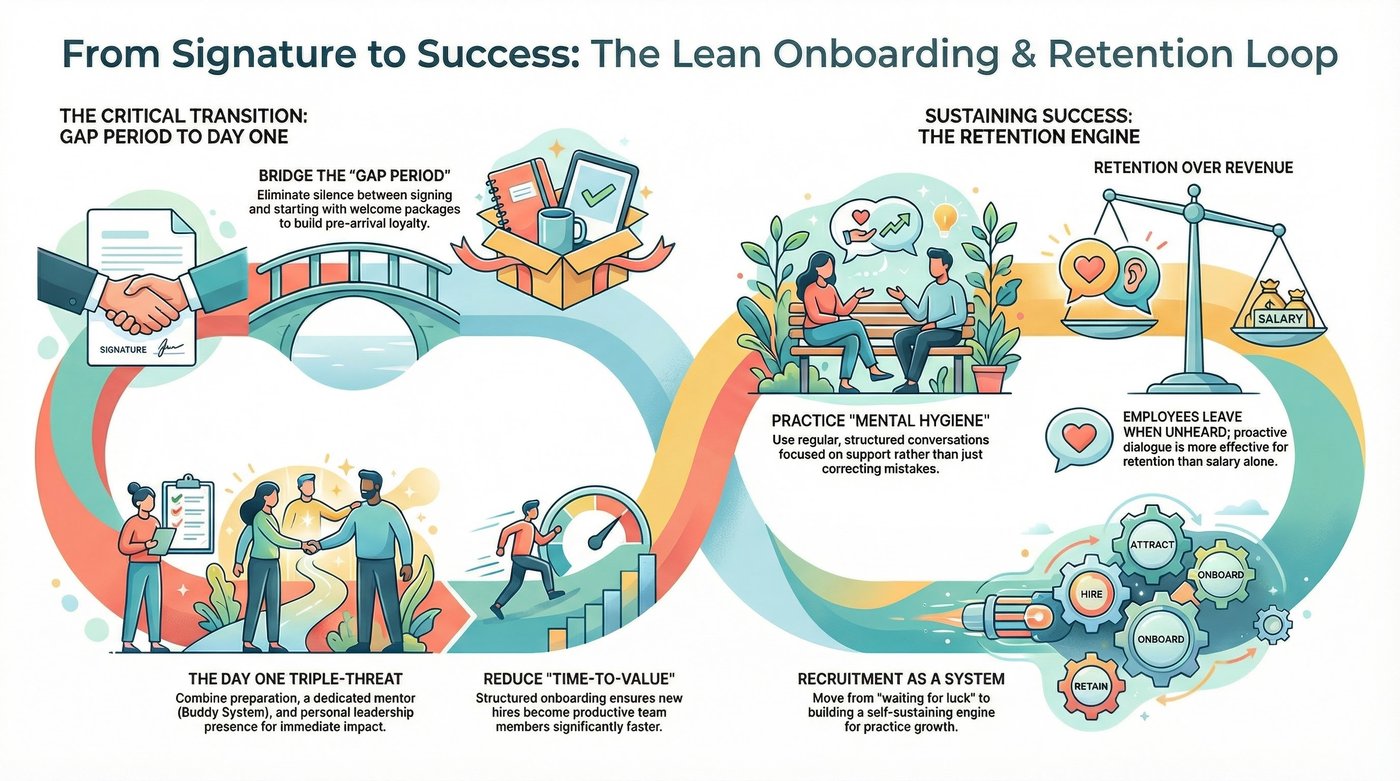
The recruitment journey does not end when the contract is signed; in many ways, that is where the most critical phase begins. Many practice owners focus all their energy on finding a new employee, only to lose them through a “leaky bucket” of poor onboarding and neglected retention.
To lead a high-performance team, you must view recruitment as a continuous loop: Attract, Hire, Onboard, and Retain. If any of these steps are broken, the entire system fails. A lean approach to team management ensures that every new hire is set up for long-term success, reducing turnover and the high costs associated with constant retraining.
Managing the “Gap Period”: Keeping the Connection Alive
There is often a gap of several months between the day a contract is signed and the new employee’s first day at the clinic. In traditional practice management, this is a period of silence. For the employee, however, it is a period of doubt and anxiety. They wonder if they made the right choice or if the team will actually be welcoming.
A lean leader eliminates this emotional waste by maintaining contact. Send a welcome package, a handwritten note, or a simple message saying, “The team is excited to see you.” By integrating them into the culture before day one, you build loyalty and ensure they arrive on their first day with confidence rather than fear.
The First Day: Onboarding with Precision
The first day of work is the most critical touchpoint in the employee journey. Throwing a new hire into the “deep end” and hoping they swim is a recipe for disaster and high stress. A lean onboarding system requires a structured plan.
Preparation: Ensure their locker is ready and the team knows their name.
The “Buddy” System: Assign a mentor to guide them through the social and technical nuances of the clinic.
Leadership Presence: Even if the schedule is busy, the boss must take the time to personally welcome the new hire.
When a new employee feels seen and supported from hour one, their “time-to-value”—the time it takes for them to become a productive team member—is significantly reduced.
Retention Through Attention: The Power of Regular Dialogue
How do you keep good people once you’ve found them? It is rarely just about the money. Most employees leave because they feel undervalued or unheard. Many bosses only provide feedback when something goes wrong, creating a culture of fear rather than growth.
Retention is a matter of “mental hygiene.” You need regular, structured conversations that aren’t focused on mistakes, but on support. Ask your team: “What do you need to do your job better?” or “How are you feeling about your progress?” This proactive attention builds a culture of trust.
Conclusion: Recruitment as a System, Not a Task
The shortage of skilled workers is a challenge, but it is also an opportunity for the lean practitioner to pull ahead. When you stop waiting for luck and start building a recruitment system, you create a self-sustaining engine for growth. By focusing on character, moving with speed, and investing in meticulous onboarding, you build a team that isn’t just “skilled,” but is deeply committed to your practice’s success.
Build the structure that attracts excellence, and the “shortage” will disappear for your practice.