

From Chaos to Autopilot: Standardizing and Sustaining Your Lean Practice
Published on: Jul 4, 2026
The Transition to Operational Excellence
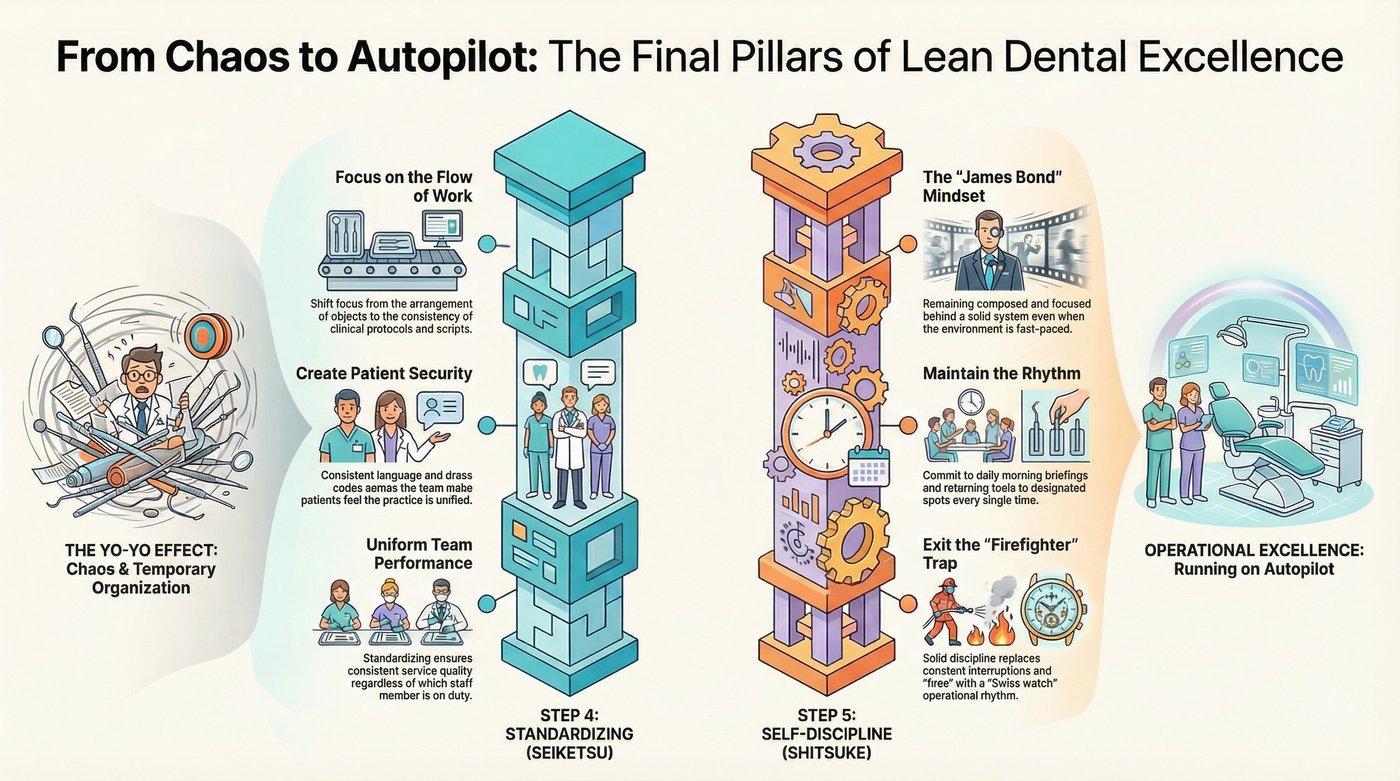
Many practices manage to get organized for a few weeks, only to have the office collapse back into chaos a month later. This is known as the “yo-yo effect” of practice management. To prevent this, dental leadership must move beyond mere organization and focus on the final two pillars of the 5S method: Standardizing and Self-Discipline.
These steps turn a “project” into a “culture.” They ensure that the improvements you make in your workflows are permanent and that your practice begins to run on autopilot, freeing you from the role of a constant “firefighter.”
Step 4: Standardizing (Seiketsu) — Creating the Workflow
While systematizing is about the arrangement of things, standardizing is about the flow of the work. This includes everything from the exact script used during a consultation to the standardized appointment chains for new patients.
When every team member uses the same professional language, dress code, and clinical protocols, the patient feels a profound sense of security. They understand that the entire practice is on the same page. Standardizing ensures that dental team performance is consistent, regardless of which assistant or receptionist is on duty.
Step 5: Self-Discipline (Shitsuke) — The James Bond Mindset
The final and most critical step is self-discipline. Lean orthodontics is simple if you stick to the rules, but it becomes exhausting if you allow them to slide. A disciplined leader is like a James Bond figure: things may be moving fast and “exploding” in the background, but they remain composed and focused because the system is solid.
Discipline means doing the morning briefing every day, not just when you feel like it. It means returning a tool to its designated spot every single time. This consistency is what makes a leader “dispensable” for the small things, providing the freedom to focus on the high-level clinical work and life outside the office.
Avoiding the “Firefighter” Trap
Practice owners who skip the self-discipline phase spend their entire day putting out avoidable fires. They are constantly interrupted by questions that could have been answered by a standard protocol. By contrast, a 5S practice runs with a “Swiss watch” rhythm.
When you follow the 5S method consistently, the team takes ownership of the environment. They notice when a drawer is empty or a process is lagging and fix it before it becomes a problem. This is the hallmark of operational excellence—a practice that evolves through the collective discipline of the entire team.
Conclusion: The Freedom of Structure
The 5S method is a powerful tool for any orthodontist looking to reduce stress and increase profitability. By sorting, systematizing, cleaning, standardizing, and maintaining discipline, you build a resilient organization. You create a practice that serves you, rather than you serving the practice. Start with one drawer, then one room, and soon you will have a clinic that functions at its absolute highest potential.