

Forensic Leadership: Using Gemba Walks to Audit the “Micro-Details” of Care
Published on: Jun 11, 2026
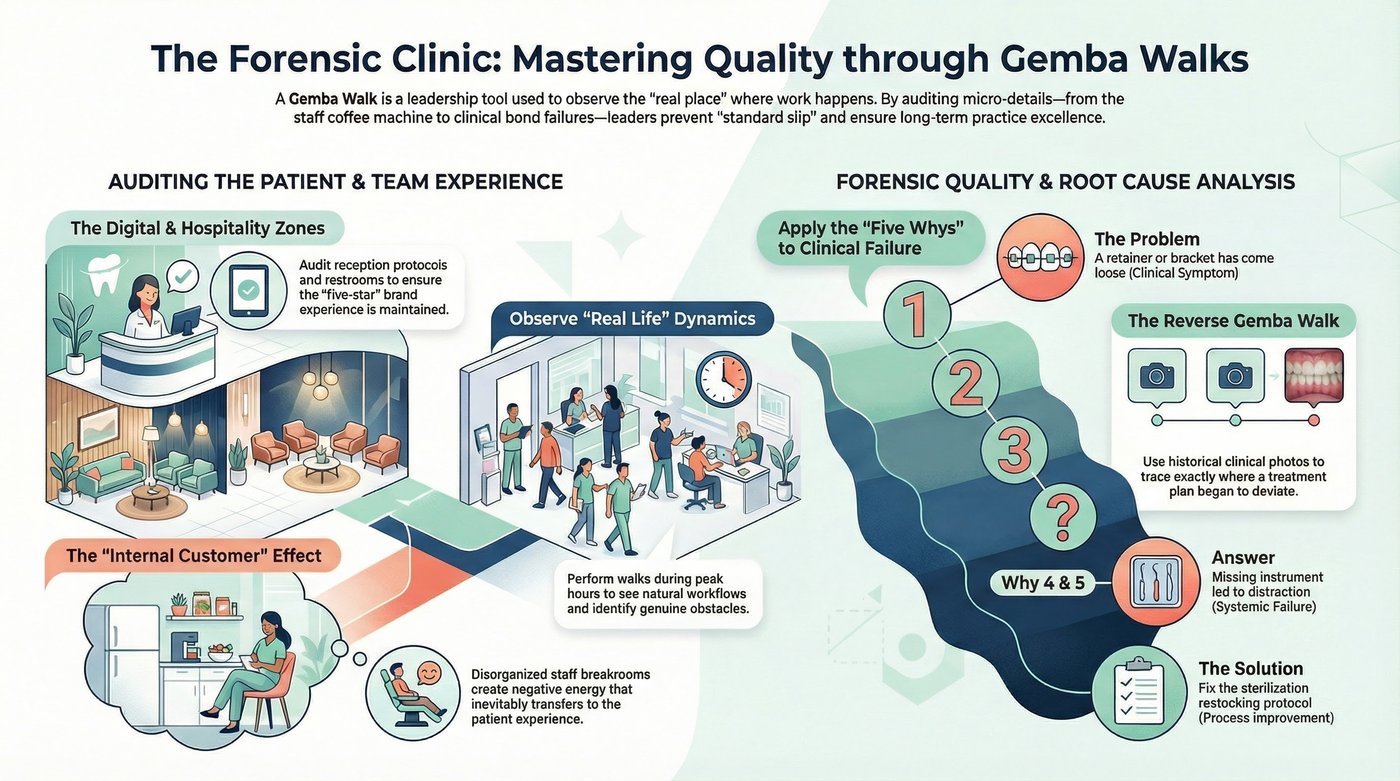
Many practice owners believe they have a “high-end” clinic, but they haven’t visited their own patient restroom or called their own reception desk in years. They assume the standard is being maintained, but standards have a natural tendency to slip over time. This erosion of excellence is often slow and insidious, affecting the subtle touchpoints that differentiate a top-tier practice from an average one. Leadership must adopt a proactive, rather than reactive, approach to maintaining operational quality.
Mastering the patient journey in orthodontics requires forensic attention to detail. A Gemba Walk—a structured approach originating from Lean methodology—is your opportunity to physically audit the tiny, seemingly trivial touchpoints that define your brand and protect your internal culture. The term “Gemba” literally means “the real place” where work is done, demanding that leaders step away from the office and observe reality. If the “behind-the-scenes” areas are a mess, the clinical area will eventually follow, proving that quality begins long before the patient sits in the chair. The goal is to uncover hidden inefficiencies or inconsistencies that patients may subconsciously notice and judge.
Auditing the Guest Experience
When you perform a Gemba Walk, you must occasionally view the practice through the eyes of a “secret shopper”. This requires setting aside your insider knowledge and consciously noticing the environment and interactions as a first-time visitor would. A full patient journey audit reveals the gap between the perceived standard and the actual delivery.
The Digital Gateway: Call your reception from an anonymous number. Are they friendly? Do they use the correct intake protocol? Does the phone ring more than twice? A busy signal or being placed on hold for too long is a direct indicator of understaffing or poor call management protocols, costing potential new patient conversions. Listen for the clarity and enthusiasm in the team member’s voice, as this sets the first impression of your practice’s culture.
The Hospitality Zone: Visit the patient’s restroom. Does it feel like a five-star experience or a neglected utility room? Audit not just for cleanliness but for amenities: are the soap dispenser, paper towels, and mirror sparkling? A dirty restroom suggests a lack of general hygiene discipline, which patients will intuitively link to clinical standards. Check for subtle details like the trash can being emptied, a pleasant scent, and a neat presentation of reading material in the waiting area.
The Internal Customer: Check the staff coffee machine. If your team is working in a disorganized, dirty breakroom, that energy will inevitably “jump” across the touchpoint to the patient. A well-stocked, clean breakroom signals to your team that you value their comfort and well-being, fostering a positive work environment. Conversely, operational friction, like constantly searching for supplies in a messy storage closet, translates directly into distracted, less focused staff members who rush interactions with patients.
A practice that is twenty years old but looks brand-new is the result of leadership that pays attention to closing drawers, cleaning corners, and maintaining the environment. Sustainability in practice management starts with these small, repetitive habits. Implementing a simple daily checklist for non-clinical areas and holding staff accountable for its execution transforms maintenance from a reactive chore into a proactive standard.
The Five Whys of Clinical Failure
When you are on the clinical floor, the Gemba Walk becomes a diagnostic tool for quality. You aren’t just looking at the teeth; you are looking at the execution. The objective is to move beyond merely fixing a failure to understanding why the failure occurred in the first place, ensuring it never happens again.
If you notice a retainer has come loose or a bracket has failed, don’t just fix it and move on. Use the “Five Whys” to find the root cause. This technique is not accusatory but systematic. It forces a drill-down from the surface symptom to the deep systemic issue that allowed the error to manifest.
Why did it come loose? The bond wasn’t strong enough.
Why was the bond weak? There was moisture contamination.
Why was there moisture? The suction wasn’t positioned correctly.
Why was the suction off? The assistant was distracted by a missing instrument.
Why was the instrument missing? The sterilization protocol failed to restock the tray.
The immediate fix is to re-cement the bracket, but the true solution is to revise the sterilization and tray-prep protocol to guarantee a complete kit every time. By digging until you find the systemic failure, you stop the same clinical error from happening twice. This is the essence of practice efficiency, which simultaneously reduces chair time, improves clinical outcomes, and minimizes frustration for both the patient and the staff. This process transforms anecdotal error correction into structured quality assurance.
The “Reverse” Gemba Walk: Learning from History
In some cases, the “real place” where work happened is in the past. We use clinical photos and digital records to perform a “Reverse Gemba Walk”. This technique focuses on historical data to uncover hidden patterns of deviation from the optimal treatment plan. It is a critical audit for accountability and continuous improvement.
By looking back through a patient’s historical records and photos, we can see exactly where the treatment plan began to deviate. Was it a biological response, or was it a procedural error? For example, examining serial photos may reveal recurring issues like premature wire placement that caused undesirable root movement or poor initial documentation that led to confusion later in treatment. Identifying whether a problem stems from an anatomical anomaly or a technical slip-up is vital for developing better clinical Standard Operating Procedures (SOPs). This forensic look at our own history allows us to refine our future protocols and maintain a five-star clinical level. This proactive use of documentation turns records from mere storage files into actionable training and leadership tools.
Timing is Everything: Capturing “Real Life”
To get an accurate picture of your practice, you must perform these observations during “normal” life. You cannot do a Gemba Walk during a team meeting or an artificial training day. You must be there when the schedule is full, the energy is high, and the team is acting naturally. This authentic observation reveals bottlenecks under stress, such as how staff navigate the transition between procedures or handle an unexpected emergency.
This transparency is vital. Your team should see your presence not as a threat but as a commitment to their success. Effective leaders adopt a non-judgmental stance, asking questions like, “Why does this process force you to take two extra steps?” rather than, “Why are you doing it wrong?” When you identify and remove the obstacles they face every day—like a poorly placed sterilization unit or a glitchy software system—you aren’t just an employer; you are a leader who is invested in the flow and quality of their work. This leadership behavior builds trust, encourages staff to proactively report issues, and creates a culture of mutual respect and continuous problem-solving.
Conclusion: The Power of Incremental Gains
Success in the modern orthodontic market is not about a single “magic bullet” technology; it is about the accumulation of small, disciplined gains. The relentless pursuit of marginal improvements across all operational aspects—from the patient intake call to the final retainer check—is the true engine of sustainable practice growth and reputation.
By regularly walking the Gemba, identifying waste, and coaching your team toward better solutions, you ensure your practice remains agile and resilient. This consistent, detail-oriented oversight hardwires quality into your practice DNA, making excellence the default standard rather than an occasional achievement. The return on investment for Gemba Walks is measured not just in reduced clinical rework but in increased staff morale and unparalleled patient confidence. Forensic leadership demands presence and observation. Take a walk through your reception, your lab, and your clinical floor today. What is the one tiny thing you can improve right now?