

Engineering Loyalty: Strategic Touchpoint Mapping for Maximum Practice Growth
Published on: Jun 13, 2026
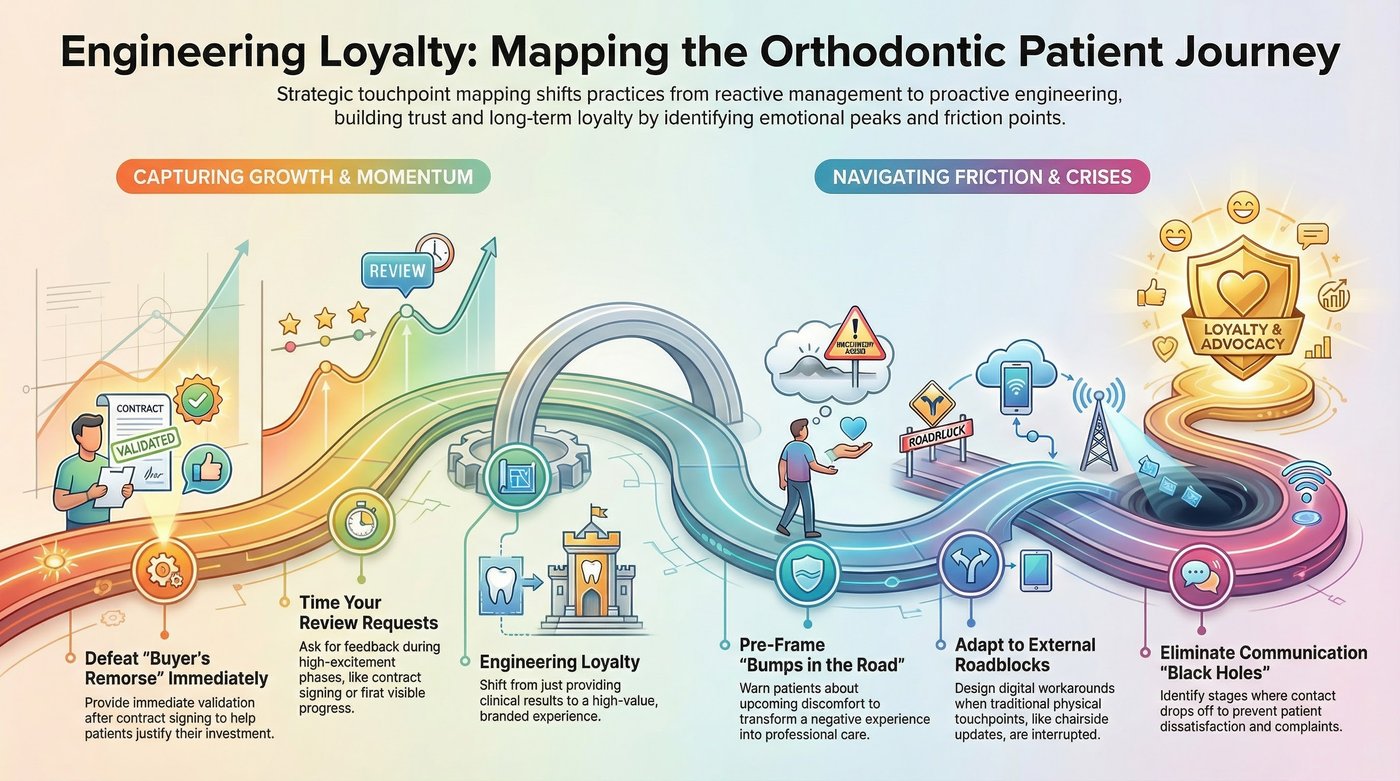
Growth in an orthodontic practice is rarely a matter of luck; it is a matter of engineering. While clinical excellence is a prerequisite, the practices that truly dominate their local markets are those that have mastered the psychology of the patient journey. By using a customer journey map to identify and optimize “high-impact” touchpoints, you can turn hesitant prospects into lifelong ambassadors for your brand.
Strategic touchpoint mapping allows you to anticipate the patient’s emotional state at every stage of their treatment, providing the right message at exactly the right time to secure commitment and drive reputation.
The Psychology of the “Buyer’s Remorse” Moment
One of the most critical, yet overlooked, touchpoints in the orthodontic journey occurs immediately after a patient signs their treatment contract. In many practices, this is where communication goes quiet until the first bonding appointment. This is a mistake.
This is the peak moment for “buyer’s remorse.” The patient has just committed a significant amount of money and time to a process they may still feel uncertain about. They are psychologically looking for reasons to justify their decision. In our journey map, we identify this as a high-impact touchpoint for positive reinforcement.
Instead of silence, this is the perfect time to provide immediate confirmation. Congratulate them on choosing health and confidence. By providing this validation, you help them “sell” the decision to themselves. It is the same psychology used by high-end luxury brands; you aren’t just selling braces, you are confirming their identity as someone who values excellence.
Strategic Review Engineering: When to Ask for Feedback
Many practice owners struggle to get consistent Google reviews or survey responses. Often, this isn’t because the patients aren’t happy, but because the request was made at the wrong touchpoint.
Using your customer journey map, you can identify the “peak-end” moments of treatment—the points where patient enthusiasm is at its highest. While the end of treatment is an obvious choice, the “contract signing” or “first visible progress” stages are equally powerful. When a patient is feeling the initial excitement of starting their journey, they are far more likely to provide a glowing, authentic review than if you wait until the process has become “routine.”
The Dynamic Map: Navigating External Crisis
A functional journey map is never static. It must be a living document that can adapt to external shifts such as economic downturns, inflation, or health crises.
Consider how the recent global lockdowns changed the patient journey. In many clinics, parents were no longer allowed into the treatment rooms. This seemingly small logistical change broke a fundamental communication touchpoint: the “chairside update.” Without that interaction, parents felt uninformed, leading to an immediate spike in complaints.
A leader using a journey map would see this “highway closure” immediately and design a “workaround.” If the parents can’t come to the chair, the practice must go to the parents—perhaps through a scheduled follow-up call or a digital progress report. By being an active architect of your journey, you can reroute your processes to maintain the patient experience even when external factors close your traditional roads.
Managing Expectations: Turning Friction into Care
Every orthodontic practice has unavoidable friction points. Whether it’s the discomfort of a new appliance or a difficult parking situation at your urban clinic, these “bumps in the road” can derail the patient journey if left unmanaged.
The strategic leader uses the journey map to “pre-frame” these issues. If you know that a certain phase of treatment is annoying, create a touchpoint that warns the patient in advance. Tell them, “This next part might be a bit uncomfortable, but here is exactly how we will get through it together.” When you anticipate the pain and offer a solution, you transform a negative experience into a demonstration of professional care. You aren’t just a doctor; you are a trusted guide.
Conclusion: Mapping Your Path to the Top
Strategic touchpoint mapping is about taking control of the narrative of your practice. It allows you to move from a “reactive” state—responding to complaints as they happen—to a “proactive” state, where every interaction is designed to build trust, value, and loyalty.
Take the time to analyze your current journey. Where are the “black holes” where communication drops off? Where are the peaks of excitement that you aren’t capturing? By refining your map, you ensure that your practice doesn’t just provide straight teeth but creates a high-value experience that patients are eager to talk about.