

Dignified Offboarding: Protecting Your Culture During Transitions
Published on: Jun 9, 2026
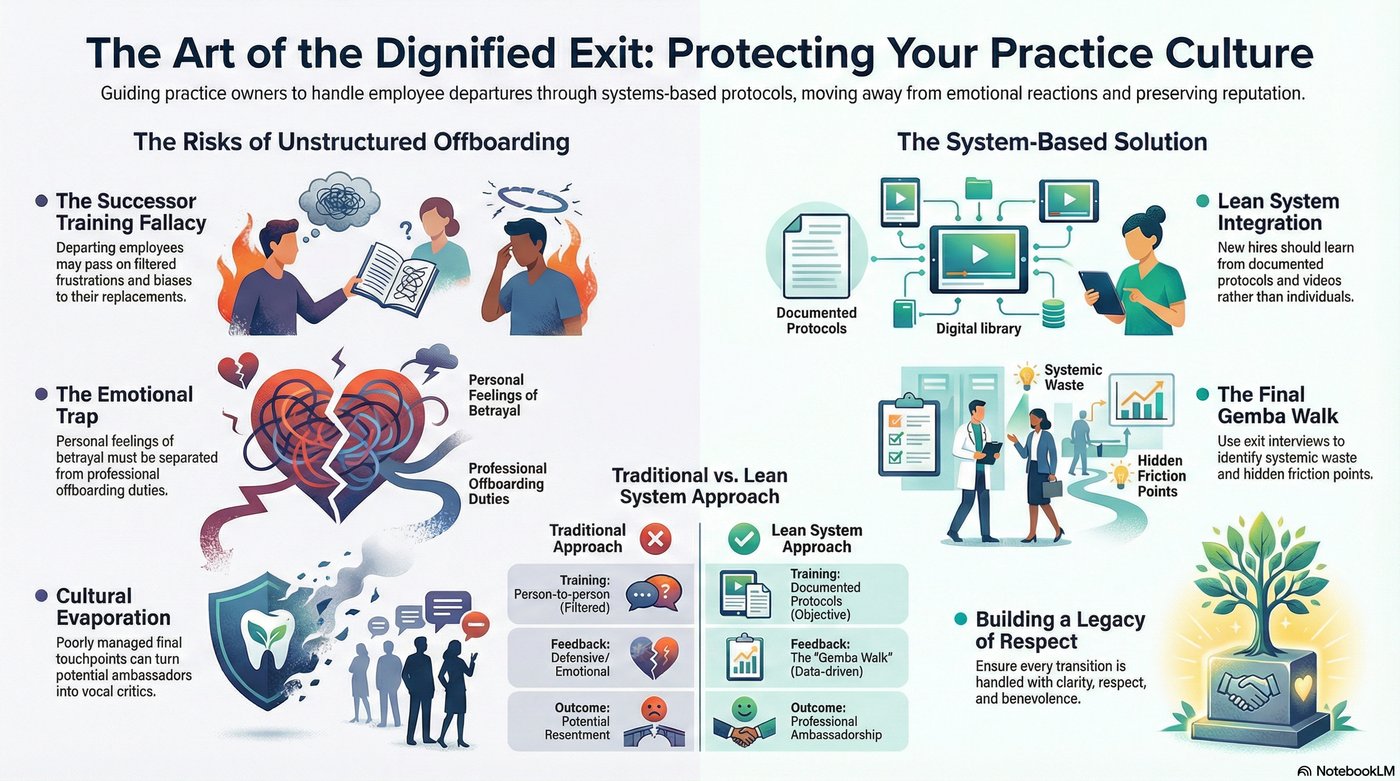
You can spend a decade building a culture of excellence and patient trust, only to see its foundation erode in a single afternoon due to a poorly handled departure. The investment you make in hiring, training, and team development is substantial, yet many practices overlook the critical importance of the exit process. In the lifecycle of a high-performing dental or orthodontic practice, offboarding is often the most neglected and mismanaged stage, treated as an administrative afterthought rather than a strategic inflection point.
From an entrepreneurial and long-term brand perspective, the final touchpoint of the employee journey is what truly determines whether a departing staff member leaves as a loyal ambassador or a vocal critic. A dignified offboarding process minimizes reputational risk, protects patient continuity, and reinforces the very cultural values you strive to maintain for your remaining team. This professionalism is not optional; it is essential for scaling a trustworthy brand.
True dental leadership requires the emotional intelligence and systemic structure to handle exits with the same professionalism and respect accorded to the initial hiring. To protect your clinic’s long-term reputation, internal morale, and competitive edge in attracting new talent, you must master the art of the dignified exit.
The Logical Fallacy of “Successor Training”
A critical and common mistake in practice management is asking a departing or dissatisfied employee to train their successor. While it seems efficient on the surface to leverage the institutional knowledge of the exiting team member, logically, this approach is a disaster for your practice culture and operational integrity. You are effectively handing the “keys to the city,” including access to sensitive operational insights and team dynamics, to someone who is already emotionally detached or potentially resentful of the organization.
Consider the inherent risks. Instead of an inspired, objective introduction to your practice’s quality standards and patient-first values, the newcomer often receives a filtered, biased list of every complaint and frustration the departing employee ever had. This immediately injects cynicism and mistrust into the new hire’s experience, jeopardizing retention before their first month is complete. This situation is particularly damaging in specialty practices where technical skill transfer is paramount.
In a truly lean and scalable system, critical function training must be entirely independent of the individual who previously held the role. The continuity of your practice should rely on robust processes, not on the mood or willingness of a single person on their way out.
System-Based Learning: The successor learns from your documented protocols and videos. These systems, such as standard operating procedures for sterilization, scheduling, or chairside assistance, must be detailed, visual, and continuously updated. This ensures consistency regardless of who is delivering the training.
Leader-Led Integration: The owner or a highly committed, culturally aligned manager introduces the values, vision, and team dynamics. This leader sets the professional tone, communicates the strategic goals of the practice, and ensures the new hire understands their role within the broader mission of patient care.
Clean Breaks: Ensure the transition happens in a way that protects the newcomer from the biases and negativity of the past. This might mean overlapping the roles for a maximum of one week, or, ideally, implementing a complete separation before the successor begins formal training, relying exclusively on documented materials.
The Emotional Burden of the Leader
The departure of a long-term team member, especially one with a strong rapport with patients and staff, is more than a logistical challenge—it is an emotional event. It is natural for the practice owner to feel a sense of grief, disappointment, or even personal betrayal, particularly if the exit was unexpected or followed a difficult period. Recognizing and managing this emotional response is a core requirement of executive leadership.
However, part of being a professional entrepreneur in the dental space is the necessary discipline of separating personal emotions from professional duty and strategic action. Allowing disappointment to dictate your reaction can lead to rash decisions, public spats, or a sudden change in demeanor that rattles the remaining staff. This instability is the fastest way to undermine morale and spur other employees to consider leaving.
Leadership in times of transition means visibly providing stability, confidence, and reassurance for the remaining team. Your team watches how you treat those who leave, and that observation defines the true nature of your culture. While you may privately feel the loss, you must publicly stick to an established, neutral offboarding protocol. This commitment to process prevents you from acting out of frustration, ensuring the transition is handled with unwavering fairness and benevolence.
By maintaining composure, you model the desired professionalism for your management team. Unless there is a severe breach of trust, such as outright fraud, theft, or patient endangerment, every exit should be structured as a moment of professional appreciation for the value that person brought to the practice. Treating a departing staff member with dignity reinforces for your current team that they will also be respected, regardless of their career trajectory.
Turning Exits into Observations: The Final Gemba Walk
The concept of a Gemba Walk, taken from lean management, involves leaders physically going to where the work is performed to observe processes firsthand. The exit interview is perhaps the most powerful and honest “Gemba Walk” a dental leader can perform. At this final stage, an employee often sheds the reluctance and fear of retribution, becoming more willing to share the truth about systemic failures, hidden friction points, and management blind spots that were previously ignored.
This conversation must be framed not as an interrogation, but as a genuine request for constructive feedback to improve the organization. Instead of allowing yourself to get defensive—which is the most common leadership error in this scenario—a lean leader listens for the “signals” of organizational waste. These signals are the clues that indicate inefficiency, poor communication, or cultural toxicity.
Specifically, look for patterns that reveal system deficiencies:
Was there a recurring pain point they couldn’t solve? For example, a front office coordinator consistently struggling with a specific insurance claim process or outdated EHR software is flagging a significant operational bottleneck.
Was there a lack of clarity in their role? Ambiguity in job descriptions, especially in fast-growing practices, leads to stress and overlaps with other team members, causing unnecessary friction.
Did they feel undervalued by a specific process? A sterile tech might leave because their efforts to maintain compliance were constantly dismissed, indicating a gap between stated values and actual management behavior.
By actively soliciting and analyzing this raw data objectively, you gain crucial intelligence that you can use to refine your operational systems and prevent the next inevitable departure. This rigorous, non-judgmental approach turns a moment of perceived loss into a valuable catalyst for continuous improvement (Kaizen), strengthening the core functionality of your practice.
Conclusion: Building a Legacy of Respect
Handing over the baton of responsibility is an inevitable part of the rhythm of any successful, growing dental or orthodontic practice. By preemptively creating a detailed, structured, and consistent offboarding protocol, you establish a standard of professionalism that ensures the “bad taste” of a poor exit never overshadows the years of excellent service provided by the team or the practice itself. A chaotic departure can undermine months of culture building, while a professional exit reinforces trust.
Ultimately, your highest priority as a practice owner and leader is not just managing today’s appointments but building a durable legacy. Your goal is to ensure that even when individuals move on to new life phases, they remain loyal advocates and fans of your practice in the professional community. This external goodwill is invaluable for recruiting future talent and maintaining your brand’s integrity. When you handle transitions with intentional clarity, unwavering respect, and a focus on documented systems rather than reacting to personal drama, you build a sustainable, resilient legacy that naturally attracts top talent, secures physician referrals, and maintains the sacred trust of your patient base. The dignified exit is the final, essential step in a truly excellent employee experience.