
Clinical versus Statistical Significance in EOS Congress Abstracts: A Persistent Misalignment
Published on: Oct 25, 2025
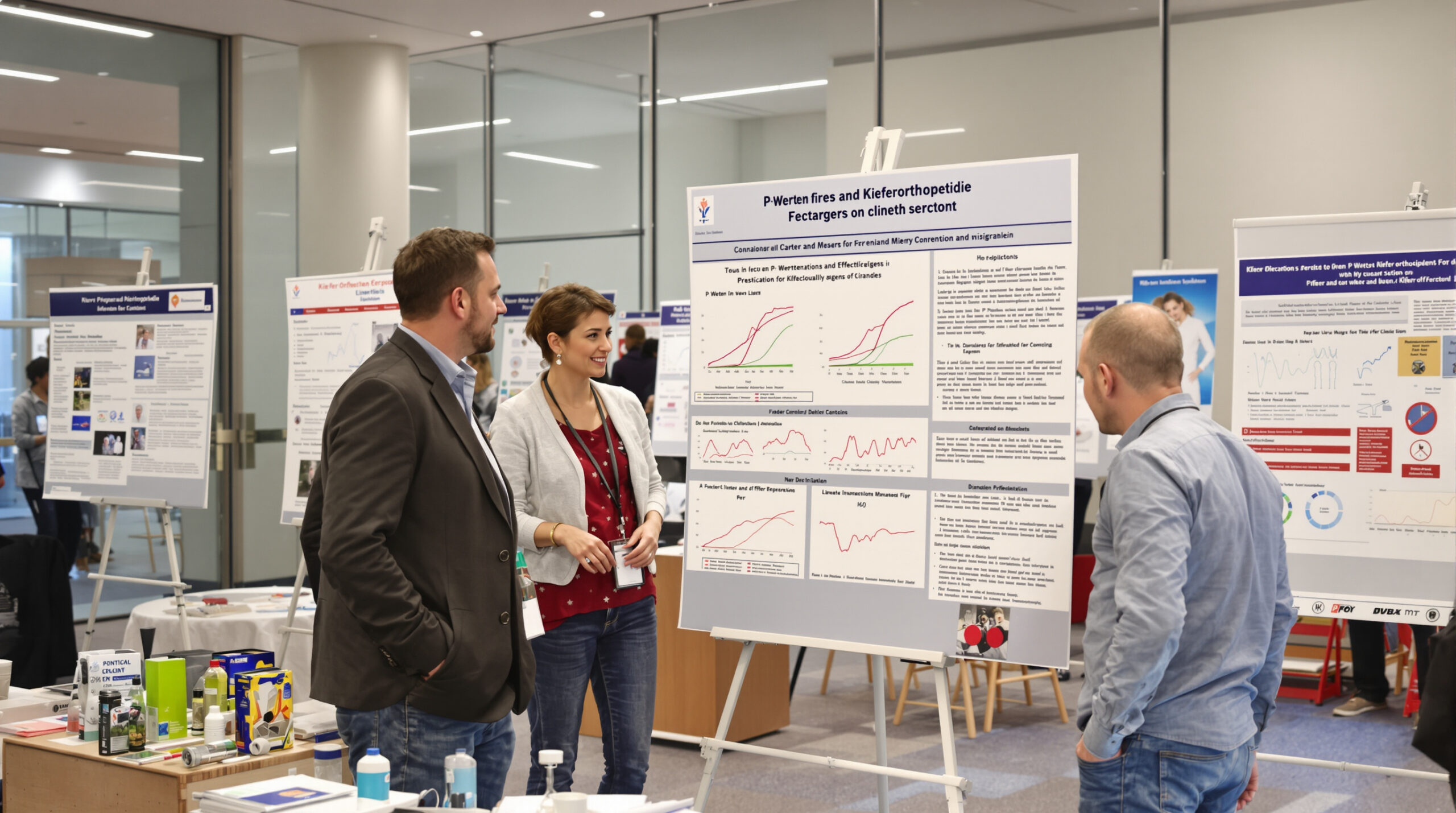
A recent study published in the European Journal of Orthodontics
Yip et al. (2025; https://doi.org/10.1093/ejo/cjaf068) examined how authors of poster abstracts presented at the European Orthodontic Society (EOS) Congress between 2014 and 2024 based their conclusions—on clinical relevance or on mere statistical significance. The authors analysed 3,654 abstracts and found that the vast majority of conclusions were driven by P-values rather than measures of clinical importance such as effect sizes and confidence intervals.
Study design and rigour
The study employed a descriptive cross-sectional review of EOS poster abstracts, using dual independent screening and extraction with high inter-reviewer agreement. The inclusion of a pre-piloted data extraction form and independent verification by a senior statistician strengthened reliability. However, the analysis was limited to a single congress series, potentially restricting generalizability. Moreover, the absence of a comparison group from other orthodontic or dental meetings leaves the extent of the issue across the specialty somewhat uncertain. Nonetheless, the methodological transparency and ten-year scope make this an important baseline investigation.
Key findings
The results were stark. More than half of all abstracts (58.5%) included no inferential statistics at all. Among those that did, nearly one-third (32.5%) reported P-values only, with a further 3.7% merely declaring their results ‘statistically significant’ without presenting numerical data. Only 10.7% of abstracts that reported inferential statistics included confidence intervals. When interpreting results in the conclusions, 31.2% of authors based their claims solely on P-values, while less than 2% incorporated both effect estimates and CIs. Across the decade studied, these proportions remained essentially unchanged.
Clinical implications
This imbalance has meaningful implications. For clinicians, statistical significance alone tells us little about whether an observed difference is large enough—or consistent enough—to matter in practice. A small but statistically significant difference in, say, arch length or treatment duration may be meaningless for patient outcomes. By focusing almost exclusively on P-values, many abstracts risk misleading readers into equating statistical detectability with clinical importance.
The authors make a persuasive call for reform. They argue that EOS should explicitly require reporting of effect estimates and 95% confidence intervals within abstract submissions. Such guidance would align orthodontic research with the principles promoted by CONSORT and other reporting standards. It would also help clinicians critically evaluate whether reported findings warrant translation into patient care.
Commentary
This paper exposes a persistent misunderstanding in orthodontic research dissemination: that a ‘significant’ P-value equates to meaningful evidence. As the American Statistical Association has emphasized, the P-value does not measure the size or importance of an effect. Yet, even after decades of discussion, many researchers—and reviewers—continue to use it as a binary stamp of validity. The findings here echo earlier work showing similar problems in orthodontic and prosthodontic literature, but it is disheartening that little progress has occurred over ten years.
From a clinical perspective, the consequences are subtle but real. Conference abstracts often represent the first—and sometimes only—exposure clinicians have to emerging data. If these summaries emphasize statistical rather than clinical meaning, they distort the evidence pipeline at its source. This study’s conclusion—that clinical significance remains under-reported and under-interpreted in EOS abstracts—is not just a statistical footnote but a reminder that our profession must re-centre its scientific discourse on clinical reality, not numerical ritual.
Reference
Yip D.A.X., Cobourne M.T., Pandis N., Seehra J. (2025). Conclusions reported in European Orthodontic Congress poster abstracts: are they based on clinical or statistical significance? European Journal of Orthodontics, 47(6), cjaf068. https://doi.org/10.1093/ejo/cjaf068.