

Beyond the Signed Contract: Using a Sales Mindset to Secure Top Talent
Published on: Jun 30, 2026
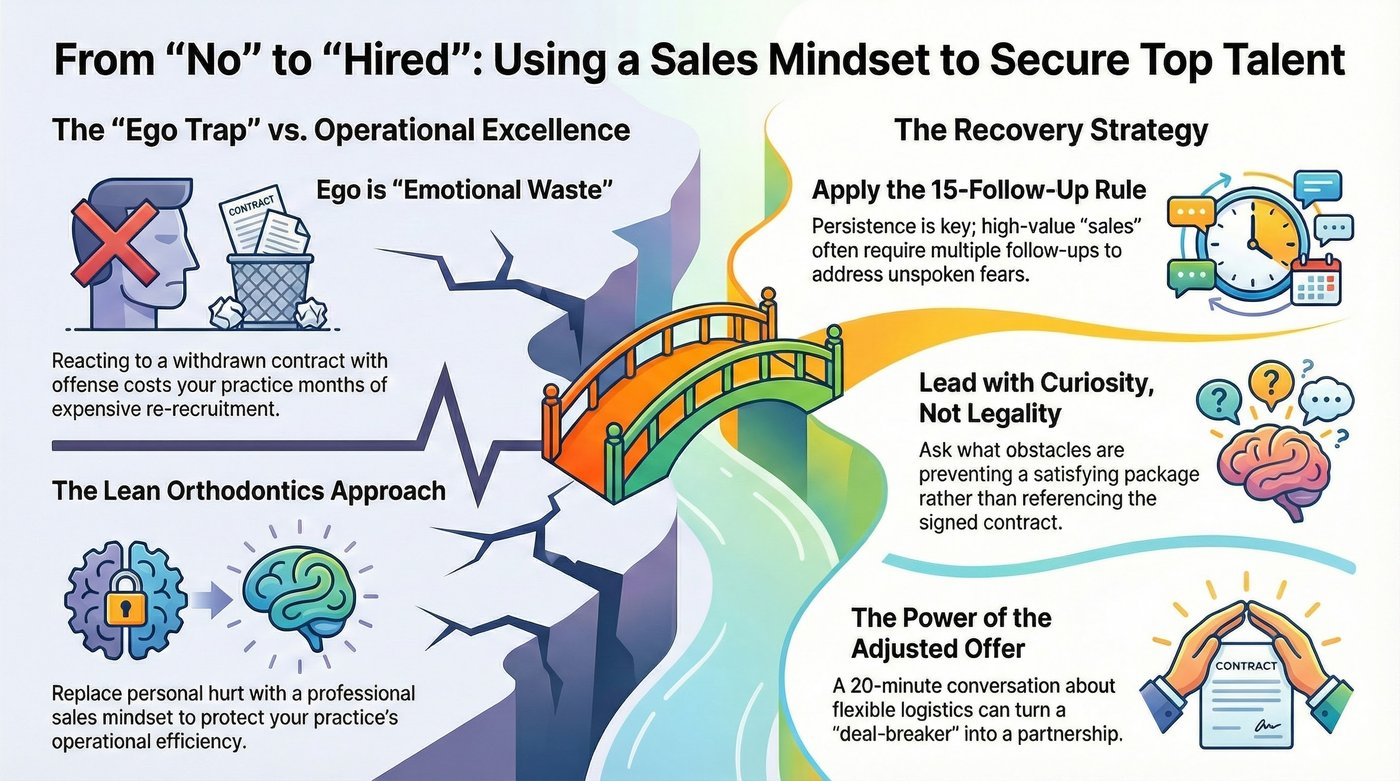
The “Ego Trap” in Recruitment
In the current orthodontic market, finding a “rough diamond” for your administration or clinical team is a rare victory. But what happens when that victory turns into a setback? You’ve done the interviews, conducted the role-plays, and secured a signed contract—only to receive a message two days later saying they’ve changed their mind.
Most practitioners react with a bruised ego. The common consensus is often, “If they back out now, they aren’t professional enough for our team.” This reaction fails to recognize the complex decision-making process inherent in a career move.
In lean orthodontics, we recognize this emotional response as a form of non-value-added waste. The immediate financial loss includes re-listing fees, lost administrative time, and the production capacity gap that widens daily. Even more insidious is the erosion of internal team morale caused by prolonged understaffing.
If you let a top-tier candidate walk away simply because you feel offended, you are committing your practice to another six months of expensive searching and training. True leadership dictates a pragmatic, objective response. You must view the signed contract not as a conclusion, but as the initial sale in a long-term professional relationship.
To achieve operational excellence, you must replace your ego with a professional sales mindset. This means adopting the same persistence, empathy, and strategic negotiation skills you would use to secure a large corporate partnership or a complex case acceptance.
Persistence: The 15-Follow-Up Rule
In professional sales, a “no” is rarely the end of the conversation. Statistically, many high-value contracts are only closed after multiple follow-ups—sometimes as many as fifteen. This persistence is not annoyance; it is the strategic application of value presentation over time.
Yet, in dentistry, we often feel like a nuisance if we ask a third time, fearing a loss of professional dignity. This cultural aversion to following up is a direct threat to talent acquisition in a competitive market.
If a candidate declines or backs out, don’t get angry—get curious. A lean leader understands that a sudden change of heart is often a signal of unmet needs or unspoken fears that the initial interview process failed to uncover. These fears are often related to the candidate’s perception of patient flow, scheduling demands, or the practice’s long-term stability.
Instead of referencing the legal obligation of the signed contract, reach out immediately with genuine appreciation. Highlight the specific reasons why you are convinced they are the right fit—mentioning a specific interview insight or a skill demonstrated during a role-play.
Follow this positive anchor by asking directly: “What are the obstacles standing in the way of a package that makes you truly satisfied?” This framing shifts the focus from the contract itself to a collaborative problem-solving session.
A strategic follow-up might involve sharing a short, personalized video tour of the clinic, focusing specifically on the team members they would work with, or inviting them back for a casual, no-pressure lunch with the existing team. This reinforces the positive culture and dispels any competitor narratives about toxic work environments, a common unspoken fear.
The Power of the Adjusted Offer
Often, a candidate says “yes” to an initial offer without fully exploring their own deeper needs regarding family care, commute, or professional flexibility. When they realize the “one-sidedness” of the initial agreement, perhaps after speaking with family or a trusted mentor, they panic and flee to a competitor.
By reaching out with transparency and curiosity, you give them the courage to bring up these specific points of friction. For a talented specialist, a “deal-breaker” might be as simple as an inflexible start time due to childcare drop-offs, or a lack of clarity on the continuing education (CE) budget.
A twenty-minute conversation can often resolve “deal-breakers” that were actually simple logistical hurdles. Perhaps you can offer a condensed four-day work week, or immediately pre-approve a CE course that a rival practice only vaguely promised. These small, non-monetary adjustments demonstrate superior flexibility and a commitment to their personal life.
By adjusting the contract to address these specific needs, you move from a traditional boss-employee relationship to a true partnership on equal footing. This negotiated agreement translates directly into higher long-term retention and engagement, dramatically improving your clinic’s ROI on its human capital.
This thirty-minute investment can save you months of recruitment costs and the “administrative ballast” of a vacant position. Furthermore, a candidate who feels truly heard during the negotiation process is far more likely to become an internal champion of your practice culture.
Conclusion: Turning Setbacks into Success
Recruitment is not a linear process. People’s life stories are complex, and their needs change, often between the interview and the start date. A sales-oriented approach acknowledges this complexity as an opportunity, not an offense.
By staying persistent, demonstrating empathy, and showing genuine interest in the individual’s complete professional and personal context, you turn a potential loss into a committed long-term hire. Remember: practice efficiency starts with the right people. Don’t let your ego stand in the way of building and retaining your dream team, ensuring sustained operational excellence.