

Beyond Straight Teeth: Why Dental Leadership Requires a Shift from Mechanics to Experience
Published on: Jun 16, 2026
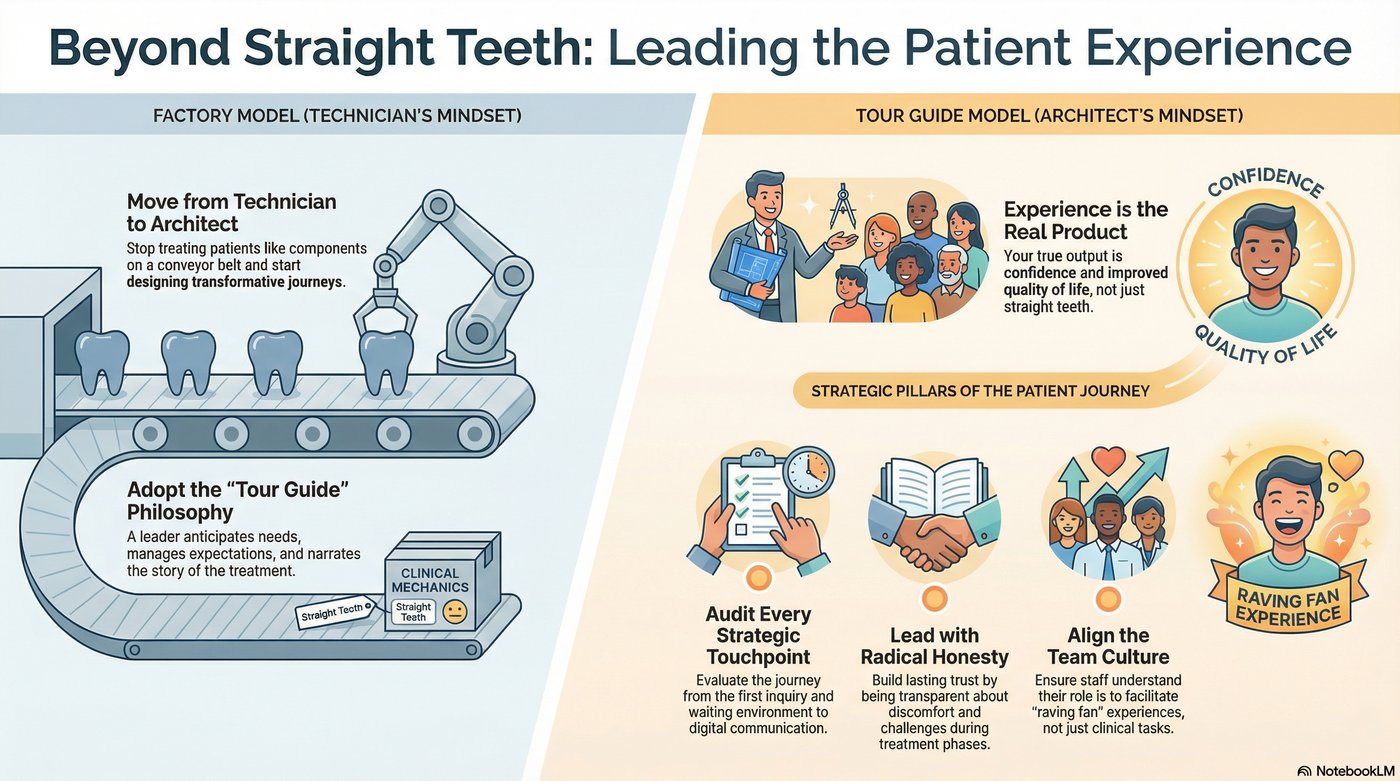
Many orthodontists operate under a fundamental misconception: they believe their primary product is the technical alignment of teeth. In this mindset, if the clinical result is a “Class I” occlusion and the cephalometric numbers are perfect, the mission is accomplished. However, in the modern competitive landscape, clinical perfection is merely the baseline. High-level dental leadership requires understanding that our true product isn’t a medical outcome—it’s the human experience that leads to it.
As practice owners, we often focus so intently on the “point A to point B” of tooth movement that we neglect the subjective reality of the person sitting in the chair. When a patient leaves a practice feeling like a component on a conveyor belt, their satisfaction remains low regardless of how straight their teeth are. To lead a thriving practice in 2026, we must stop acting as mere technicians and start acting as architects of a transformative journey.
The Role of the Practice Owner as a “Tour Guide”
In a traditional orthodontic practice management model, the schedule dictates the flow. Patients are moved from station to station, technician to technician, often with minimal context or personal connection. This is the “factory model,” and it is the enemy of patient loyalty.
A leadership-driven approach replaces the factory mindset with a “tour guide” philosophy. A tour guide doesn’t just show you a monument; they tell the story, anticipate your needs, and manage your expectations about the road ahead. In the clinic, this means taking ownership of the narrative. When we stop being slaves to our systems and start guiding the experience, we turn a medical necessity into a life-changing event. Our real product is the confidence to smile, the ability to eat without pain, and the improved quality of life that follows treatment.
Mapping the Strategic Touchpoints
To master the patient journey in orthodontics, we must identify every “touchpoint”—those moments where the patient interacts with our brand. This starts long before they sit in the clinical chair and continues long after they leave.
The Initial Inquiry: Is the first phone call met with a warm, expert voice or a rushed, administrative tone?
The Waiting Environment: Does the physical space communicate comfort and professionalism, or clinical coldness?
The Digital Bridge: Are email confirmations and SMS reminders adding value or creating digital noise?
As leaders, we must recognize that the gaps between these touchpoints are where dissatisfaction often grows. If a patient feels “lost” in a long treatment phase without clear communication, they become anxious. A leader’s job is to bridge these gaps with intentionality, ensuring the patient never feels like they are traveling alone.
The Power of Radical Honesty in Leadership
A common pitfall in dental leadership is the desire to over-promise. We tell patients that braces won’t hurt or that the process will be entirely seamless. When reality hits—when the wires poke or the aligners are uncomfortable—trust is eroded.
True leadership is built on honesty. By telling a patient, “This phase will be challenging, and you might feel some discomfort, but we will navigate it together,” you transform their subjective experience. You aren’t just a doctor providing a service; you are a trusted partner managing a transition. This transparency builds a level of patient loyalty that clinical skill alone can never achieve.
Leading Your Team Toward Experience-Driven Care
Shifting from mechanics to experience is not a solo mission; it requires a complete alignment of dental team performance. Your staff must understand that their role isn’t just to change ligatures or take impressions—it is to facilitate a “raving fan” experience.
This requires regular review and training. Leadership means looking at the data, listening to patient feedback, and being willing to adjust the journey. We should ask ourselves, “Where is the friction in our process? Where do patients feel processed instead of cared for?” By involving the team in these discussions, you create a culture of ownership where everyone feels responsible for the patient’s emotional outcome.
Conclusion: Orchestrating the Life-Changing Smile
Mastering the patient journey is the ultimate differentiator in modern orthodontics. While anyone can buy the latest brackets or software, very few can master the art of the human experience. When you move your focus from the mechanics of the mouth to the journey of the individual, you secure the future of your practice.
Stop thinking of your clinic as a facility for straight teeth. View it as a travel agency for transformation. When you guide your patients through the traffic jams and rest stops of treatment with empathy and expertise, they don’t just leave with a better smile—they leave as ambassadors for your practice.